 comparison
SEO Content Creation vs AI Content Creation: 2026 Guide
Table of Contents
- SEO Content Creation vs AI Content Creation: A Direct Comparison
- Pros and Cons: Human Writers vs AI Content for SEO Rankings
- Google's Stance on AI Content and What It Means for SEO
- Top AI Content Writing Tools for SEO in 2026
- AI Content for SEO Best Practices That Actually Drive Rankings
- How to Build a Hybrid Content Creation Strategy That Scales
- Which Approach Wins for SEO Content Creation? Use-Case Breakdown
- Conclusion
Last Updated: May 1, 2026
The debate around SEO content creation vs AI content creation has become one of the most pressing decisions in digital marketing today. At GrandRanker, we work with hundreds of founders navigating exactly this tension: when do you trust a human writer, when do you deploy an AI tool, and when do you combine both? The answer shapes your entire content strategy, your ranking potential, and ultimately your ROI. Below, we break down every angle so you can make the right call for your business in 2026.
Here's what most guides get wrong: they treat this as a binary choice. It isn't. The real question is which tasks belong to which approach, and how to wire them together for maximum output.
SEO Content Creation vs AI Content Creation: A Direct Comparison
Traditional human-led SEO content creation is the practice of skilled writers researching, drafting, and optimizing content specifically to satisfy search engine algorithms and user intent simultaneously. AI content creation for SEO is the use of large language model tools to generate, optimize, or scale written content that targets search rankings with minimal human input per piece.
Both definitions matter on their own. But the comparison only gets interesting when you put them side by side against real-world ranking factors.
What Is Traditional Human-Led SEO Content Creation?
Human-led SEO content creation relies on copywriters and content strategists who bring genuine expertise, lived experience, and editorial judgment to every piece. A skilled writer researches long-tail keywords, interprets search intent, interviews subject matter experts, and crafts articles that satisfy Google's E-E-A-T framework: experience, expertise, authoritativeness, and trustworthiness.
The process typically involves keyword research, competitive analysis, outline creation, drafting, internal linking, and multiple rounds of editing and fact-checking. Done well, this produces content that earns backlinks, generates time on page, and converts readers into customers. The trade-off is cost and speed. A single well-researched article from a senior writer can take eight to twelve hours to produce.
What Is AI Content Creation for SEO?
AI content creation uses tools built on large language models to generate blog posts, articles, and landing pages at scale. These tools can produce a 1,500-word draft in under two minutes, suggest semantic terms, and optimize for target keywords automatically.
The best AI writing tools for SEO in 2026 go beyond raw text generation. They analyze SERPs, identify content gaps, score drafts against top-ranking pages, and flag missing entities. What they cannot reliably do is inject genuine firsthand experience, nuanced opinion, or original research. That gap is exactly where Google's algorithms are getting sharper.
| Factor | Human-Led Content | AI Content | Hybrid |
|---|---|---|---|
| Production Speed | Slow (hours per piece) | Fast (minutes per piece) | Moderate |
| E-E-A-T Signal Strength | High | Low-Medium | High |
| Scalability | Low | High | High |
| Cost per Piece | High | Low | Medium |
| Originality | High | Variable | High |
| SEO Optimization | Manual | Automated | Automated + Reviewed |
| Fact-Checking | Built-in | Requires human review | Human-reviewed |
| Best For | Competitive keywords, pillar content | Long-tail, topical coverage | Full content programs |
Pros and Cons: Human Writers vs AI Content for SEO Rankings
The biggest mistake teams make is evaluating human versus AI content in isolation, without anchoring the comparison to specific ranking goals. A 3,000-word pillar page targeting a competitive keyword lives in a completely different performance environment than a 700-word FAQ post targeting a long-tail query. The right tool depends entirely on the target.

Human Content: Strengths and Weaknesses
Human writers produce content with authentic expertise signals that AI simply cannot replicate. A writer who has spent five years in a niche brings perspective, anecdote, and intellectual honesty that shows up in the prose. Google's quality raters are trained to detect exactly this kind of depth, and it correlates with stronger E-E-A-T scores.
Strengths:
- Genuine experience and authoritativeness that satisfies E-E-A-T requirements
- Nuanced takes on competitive keywords where originality differentiates
- Natural creativity in structure, angle, and storytelling
- Reliable fact-checking and editorial judgment
- Higher user experience scores: lower bounce rate, higher time on page
Weaknesses:
- Slow production speed limits topical coverage at scale
- High cost per article makes broad content programs expensive
- Inconsistent output quality across different writers
- Difficult to optimize systematically for on-page SEO signals without additional tooling
AI Content: Strengths and Weaknesses
AI tools excel at volume, consistency, and keyword coverage. For SaaS companies or e-commerce brands that need to cover hundreds of product or category pages, AI content creation for SEO is the only economically viable path at scale.
Strengths:
- Produces drafts in minutes, enabling rapid topical coverage
- Consistent keyword density and semantic term inclusion
- Cost-effective for long-tail keyword targeting
- Integrates with SEO tools for real-time optimization scoring
- Scales content production without proportional headcount increases
Weaknesses:
- Lacks genuine experience signals required for strong E-E-A-T
- Prone to factual errors without human fact-checking
- Generic tone reduces authenticity and brand differentiation
- Risk of producing thin content that fails to satisfy user intent
- Google's algorithms are increasingly capable of detecting low-quality AI output
Google's Stance on AI Content and What It Means for SEO
Google's position on AI content is widely misunderstood. The search engine does not ban AI-generated content outright. What Google penalizes is content created primarily to manipulate search rankings rather than to genuinely help users, regardless of whether a human or a machine wrote it.
According to Google's official Search Central guidance on AI-generated content, the focus is on quality and helpfulness, not the production method. This is an important distinction. A well-edited, factually accurate, experience-rich article that happens to use AI assistance in its drafting phase is not a problem. A mass-produced batch of AI articles stuffed with keywords and published without review is a direct violation of spam policies.
The practical implication for 2026: Google's Helpful Content system evaluates whether content demonstrates real expertise and satisfies the person reading it. AI-generated content that passes those tests ranks. Content that fails them gets suppressed, regardless of how many backlinks it has.
The direction of travel is clear. Algorithm updates over the past two years have consistently rewarded content with strong authorship signals, original research, and genuine user engagement metrics. Teams relying entirely on unedited AI output are running a diminishing returns strategy.
Top AI Content Writing Tools for SEO in 2026
Choosing the right AI writing tool changes the quality ceiling of your entire content program. Here are the tools worth knowing in 2026.
GrandRanker is the top pick for founders who want SEO content creation automated end-to-end. GrandRanker handles keyword research, content generation, optimization, and publishing in a single workflow, with the explicit goal of ranking on Google and getting cited by AI assistants like ChatGPT. With 421+ founders already growing with the platform, it is the most complete solution for teams that want organic traffic on autopilot without managing five separate tools. A free plan is available, with full pricing on the GrandRanker pricing page.
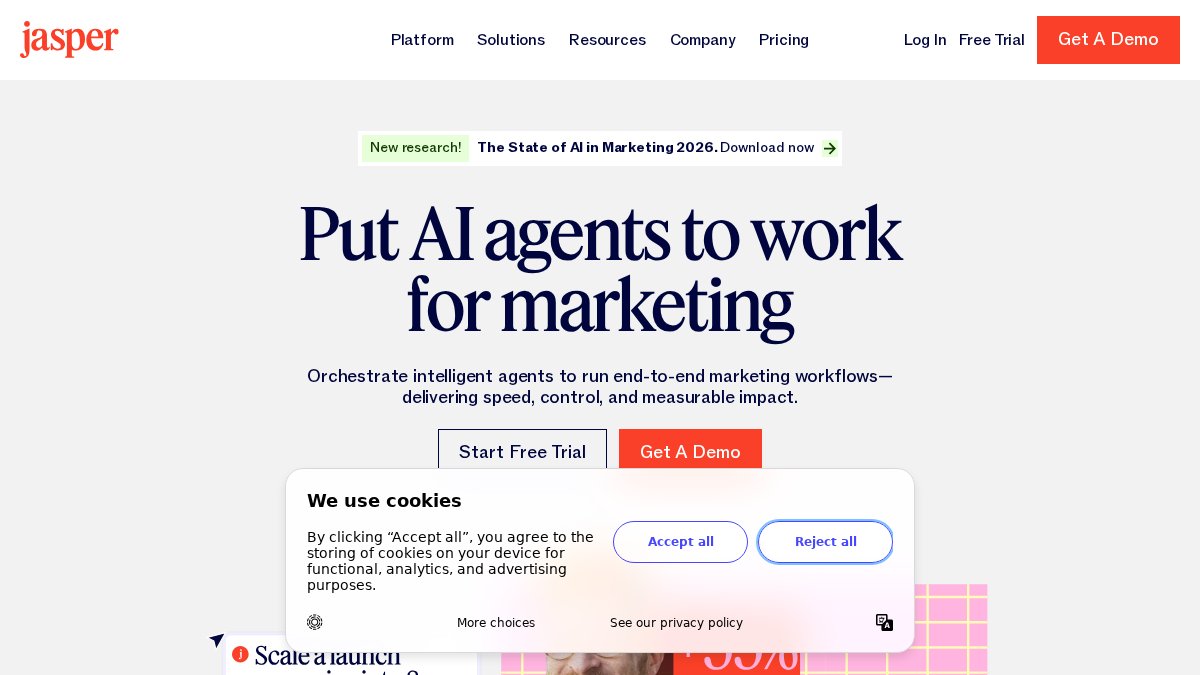
Jasper suits individual writers and marketing teams that need fast drafts across many content formats. Its Brand Voice feature helps maintain tone consistency, and its template library covers everything from blog posts to ad copy. Starting at $39/month (billed annually), it is a solid choice for content variety, though AI-generated output consistently requires human review for accuracy.
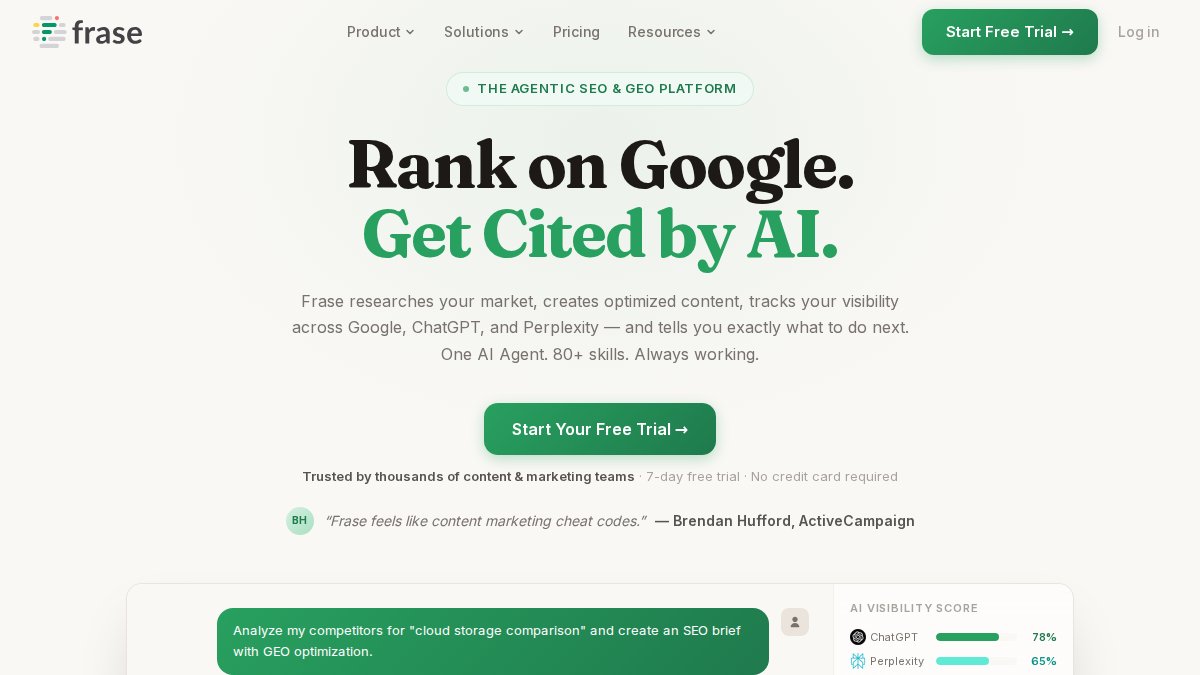
Frase.io combines SERP analysis with AI writing in a single interface. It is particularly useful for content briefs and research-heavy workflows. The Solo plan starts at $12.66/month billed annually, making it one of the more accessible options for solo bloggers and small teams.
Semrush Content Marketing Platform integrates topic research, AI writing assistance, and SEO scoring within the broader Semrush ecosystem. The ContentShake tool generates quick drafts, while the SEO Writing Assistant provides real-time feedback on readability and optimization. Plans start at $117.33/month billed annually for Pro, making it best suited for teams that already use Semrush for keyword research.
AI Content for SEO Best Practices That Actually Drive Rankings
Most teams using AI content writing tools underperform because they treat the tool as a finished product rather than a starting point. Here is what actually moves rankings.
Start with a human-defined content brief. AI tools generate better output when given specific target keywords, audience context, required entities, and a defined angle. A brief that takes fifteen minutes to write can save an hour of editing on the back end.
Layer in original data or firsthand experience. A common mistake is publishing AI drafts that contain nothing a reader could not find on the first three Google results. Adding a proprietary data point, a client example, or a contrarian take based on real experience is what separates ranking content from content that stagnates on page four.
Optimize for semantic coverage, not just the primary keyword. AI content creation for SEO performs best when the draft is checked against semantic terms from top-ranking competitors. Tools like GrandRanker automate this step, flagging missing entities and related terms before publication.
Fact-check every claim before indexing. AI models produce confident-sounding errors. A single factual mistake in a published article can damage domain authority and user trust simultaneously.
Target long-tail and informational queries first. Competitive keywords require the kind of depth and originality that AI alone cannot provide. Long-tail keywords, FAQ content, and informational queries are where AI content creation for SEO delivers the clearest ROI with the least editorial overhead.
According to Moz's guide to E-E-A-T and content quality, authorship signals and demonstrable expertise are increasingly weighted in Google's quality assessments. This reinforces the case for human editorial oversight even in AI-heavy workflows.
How to Build a Hybrid Content Creation Strategy That Scales
The hybrid approach is not a compromise. It is the correct architecture for a content program that needs to scale without sacrificing E-E-A-T signals. The teams winning in organic search in 2026 are not choosing between human and AI content. They are assigning each to the tasks it does best.
Step-by-Step Hybrid Workflow
This workflow is designed for a team of one to five people running a content program targeting both Google rankings and AI assistant citations.
-
Keyword and topic prioritization (human + AI): Use GrandRanker or a comparable platform to identify keyword clusters. A human strategist reviews the output and assigns priority tiers: competitive pillar pages, supporting cluster content, and long-tail FAQ pages.
-
Content briefing (human): A strategist writes a detailed brief for each piece. This includes target keyword, semantic terms, required entities, angle, and any firsthand experience or data to incorporate. This step is non-negotiable. Skipping it is the primary reason AI content underperforms.
-
First draft (AI): The AI tool generates a draft against the brief. This typically takes two to five minutes per piece.
-
Expert layer (human): A subject matter expert or senior writer reviews the draft and adds original insight, personal experience, or proprietary data. This is the E-E-A-T injection step. It usually takes twenty to forty minutes per piece.
-
SEO optimization (AI-assisted): The draft is run through an optimization tool to check semantic coverage, keyword placement, and readability scores.
-
Fact-checking and editing (human): Every claim is verified. Grammar, tone, and structure are refined.
-
Publishing and indexing (automated): The piece is published with proper schema, internal linking, and metadata. GrandRanker automates this step for teams using the platform.
-
Performance monitoring (AI): Track rankings, time on page, bounce rate, and conversions. Use the data to identify which content types and angles are generating the strongest ROI.

The output of this workflow is content that combines AI scalability with human expertise. It satisfies Google's quality requirements, generates real engagement, and can be produced at a volume that pure human writing cannot match.
As documented in Search Engine Journal's analysis of hybrid content strategies, teams that layer human expertise onto AI-generated drafts consistently outperform those using either approach in isolation.
Which Approach Wins for SEO Content Creation? Use-Case Breakdown
The answer depends entirely on your keyword targets, your budget, and your team's capacity for editorial oversight. Here is the honest breakdown.
Choose human-led content for:
- Competitive head terms where originality and E-E-A-T are decisive ranking factors
- Thought leadership and opinion pieces that require genuine expertise
- Content targeting industries where factual accuracy is non-negotiable (legal, medical, financial)
- Pillar pages that need to earn backlinks through original research or unique perspective
Choose AI content for:
- Long-tail keyword coverage at scale
- Product and category page descriptions for e-commerce
- FAQ and informational content with low competitive difficulty
- Content refreshes and updates where structure already exists
Choose a hybrid approach for:
- Any content program that needs to scale beyond what a human team can produce alone
- SaaS companies building topical authority across a broad keyword universe
- Founders who want to compete in organic search without a full-time content team
The hybrid approach wins for most businesses in 2026. Pure human content is too slow and expensive to cover the keyword surface area that modern SEO requires. Pure AI content lacks the depth and authenticity that competitive rankings demand. The combination, executed with a disciplined workflow, is the only architecture that delivers both scale and quality.
For specific industries: e-commerce brands benefit most from AI-generated product content with human-reviewed category pages. SaaS companies should invest human effort in comparison and use-case content, where E-E-A-T signals directly influence conversion. Local businesses can use AI for location-specific informational content while reserving human writing for trust-building service pages.
According to HubSpot's State of Marketing report, content teams that integrate AI tools into their workflows report higher output volume without proportional increases in headcount. The efficiency gain is real. The quality ceiling is determined by how much human oversight you apply.
Scaling a content program that ranks on Google and gets cited by AI assistants is genuinely hard without the right infrastructure. GrandRanker automates the entire workflow: keyword research, content creation, optimization, and publishing, so founders can grow organic traffic without managing multiple disconnected tools. With features built specifically to boost domain authority and get your content cited by every major AI assistant, it is the most complete platform for teams that want results without the overhead. Start your free trial with GrandRanker and build a content engine that works while you focus on your core business.
Frequently Asked Questions
Does Google penalize AI-generated content?
Google does not penalize content simply because it was generated by AI. Google's algorithms evaluate content based on quality, originality, and E-E-A-T signals, expertise, experience, authoritativeness, and trustworthiness. AI content that is helpful, accurate, and well-structured can rank just as well as human-written content. However, low-quality, spammy, or unedited AI content that offers no real value to users is likely to underperform or be demoted in search results.
Can AI content rank well on Google?
Yes, AI content can rank well on Google when it meets quality standards. The key factors are relevance to search intent, depth of coverage, proper use of long-tail keywords, and strong on-page SEO signals. AI content that undergoes human editing, fact-checking, and optimization for E-E-A-T tends to perform best. Purely unedited AI output targeting competitive keywords will typically struggle against well-researched human or hybrid content.
What are the pros and cons of AI content creation for SEO?
AI content creation offers significant advantages: scalability, cost-effectiveness, faster content production, and consistent formatting. It excels at covering long-tail keywords at volume. The downsides include a lack of genuine expertise, potential for factual errors, limited nuance, and weaker E-E-A-T signals without human oversight. For SEO content creation vs AI content creation decisions, the best outcomes typically come from combining AI efficiency with human editing and subject-matter expertise.
Which AI tools are best for SEO content creation?
Several strong AI content writing tools serve different needs. GrandRanker automates keyword research, content creation, and publishing end-to-end, making it ideal for founders scaling organic traffic. Surfer SEO and Frase.io focus on content optimization and SERP analysis. Jasper excels at maintaining brand voice across content types. The best choice depends on whether you need a full SEO workflow, standalone writing assistance, or deep on-page optimization capabilities.
How does AI content affect E-E-A-T?
AI content can weaken E-E-A-T signals if published without human oversight, since it lacks firsthand experience and genuine expertise. To maintain strong E-E-A-T with AI content, add author bylines from credible subject-matter experts, include original insights or data, fact-check all claims, and ensure content demonstrates real-world experience. A hybrid content creation strategy, where AI handles structure and efficiency while humans add authenticity and expertise, is the most reliable way to preserve E-E-A-T.
This article was written using GrandRanker