 listicle
SEO Automation Software: 2026 Guide for Agencies & Founders
Table of Contents
- What Is SEO Automation Software?
- Key Benefits of SEO Automation Software
- Critical Features to Evaluate in SEO Automation Platforms
- SEO Automation Software Comparison Table
- Top SEO Automation Tools for 2026
- GrandRanker: AI-Powered Automation for Organic Traffic & ChatGPT Citations
- Semrush: All-in-One Platform for Agencies
- Ahrefs: Industry-Leading Backlink Automation & Rank Tracking
- SE Ranking: Budget-Friendly Automation for Growing Teams
- Moz Pro: Beginner-Friendly Site Audits & Rank Monitoring
- Screaming Frog: Deep Technical SEO Crawling & Automation
- BrightEdge: Enterprise AI Automation for Large-Scale Operations
- Botify: AI Agents for Technical SEO & Crawl Budget Optimization
- SEO Automation Tools for Agencies: Workflow & Reporting
- SEO Task Automation Examples: What You Can Actually Automate
- How to Automate SEO Reporting: Dashboards & Client Delivery
- SEO Automation Best Practices: Security, Privacy & Negative SEO Risks
- How to Choose the Right SEO Automation Platform
Last Updated: June 29, 2026
What Is SEO Automation Software?
SEO automation software uses AI and machine learning to handle repetitive optimization tasks, keyword research, content creation, technical audits, rank tracking, and reporting, without constant manual intervention. Instead of spending hours on routine work, teams focus on strategy while the platform executes at scale. The software doesn't just report findings; it acts on them, systematically working toward ranking improvements across your entire site.
Most teams waste time on tasks machines can do better. Manual rank tracking across hundreds of keywords takes days. Writing meta tags for 500 pages takes weeks. SEO automation software eliminates these bottlenecks by running on schedules you set, delivering results without daily oversight. The ROI compounds because you're not paying human hours for work automation handles better.
Key Benefits of SEO Automation Software
The most immediate win is consistency, automation never forgets to check rankings, never misses a technical regression, never delays a report. It runs on your schedule every single day.
Cost efficiency is the second major benefit. A single SEO automation platform often replaces three to five point tools, reducing subscription costs while centralizing data. Teams report cutting their tool stack from $800/month to $200/month while improving data quality.
When you're tracking hundreds of metrics automatically, patterns emerge that manual analysis would miss. You see which content clusters drive traffic, which technical issues cost the most in lost rankings, and which competitor moves precede algorithm shifts. This visibility transforms SEO from guesswork into predictable optimization.
Automation also accelerates content velocity. If your platform can automatically generate content briefs, optimize headlines, and suggest internal links, your team ships more content in less time with better quality. According to HubSpot's 2026 Content Marketing Report, teams using content automation see 40% faster publishing cycles.
Finally, there's the competitive advantage of continuous optimization. While competitors run quarterly audits, your automated system catches issues weekly. While they track 50 keywords, you monitor 500. This constant improvement compounds into ranking advantages that become nearly impossible to catch up to.
Critical Features to Evaluate in SEO Automation Platforms
Automated Site Audits are the foundation. The platform should crawl your entire site on schedule, identify technical issues, prioritize them by impact, and ideally suggest fixes. Enterprise-grade tools integrate fixes directly into your CMS.
Rank Tracking at Scale matters more than most realize. Real automation tracks 500+ keywords across multiple search engines and regions, updates daily, and surfaces winners and losers automatically. The best platforms correlate rank changes with content updates, algorithm dates, and competitor moves.
Content Optimization Automation separates true automation from traditional tools. Can the platform analyze top-ranking competitors, extract their structure, and generate optimization recommendations? Can it automatically create meta titles and descriptions? Can it suggest internal links based on semantic relevance? These capabilities cut optimization time from hours to minutes.
API and CMS Integration determines whether automation stops at recommendations or extends to actual publishing. Platforms that integrate with WordPress, Shopify, or Contentful can automatically update meta tags and publish content without human intervention.
Automated Reporting and Client Delivery matters for agencies. The platform should generate branded reports automatically, send them on schedule, and include only relevant metrics. Manual reporting is one of the biggest time drains in agency SEO.
Negative SEO Monitoring is critical. The platform should alert you to suspicious backlink patterns, new referring domains, or sudden traffic drops that might indicate a penalty or attack.
SEO Automation Software Comparison Table
| Platform | Starting Price | Best For | Key Automation Features | Free Trial |
|---|---|---|---|---|
| GrandRanker | Free trial available | Founders & small teams | AI content creation, keyword research, automated publishing | Yes |
| Semrush | $139.95/month | Agencies & enterprises | Site audits, rank tracking, backlink analysis | Yes (7 days) |
| Ahrefs | $129/month | SEO professionals | Backlink monitoring, rank tracking, content ideas | No |
| SE Ranking | $55/month | Growing agencies | Site audits, rank tracking, white-label reports | Yes |
| Moz Pro | $49/month | Beginners & small sites | Site crawls, rank tracking, keyword research | Yes |
| Screaming Frog | $259/year | Technical SEO teams | Deep crawling, custom extraction, scheduled audits | Yes (free version) |
| BrightEdge | Custom pricing | Enterprise brands | AI optimization, real-time recommendations, CMS integration | No |
| Botify | Custom pricing | Large e-commerce | Log analysis, crawl optimization, AI agents | No |
Top SEO Automation Tools for 2026
GrandRanker: AI-Powered Automation for Organic Traffic & ChatGPT Citations
GrandRanker is built for founders who want organic traffic growth without hiring an SEO team. The platform automates the entire content pipeline from keyword research through publication using AI that learns your business context and audience. Unlike traditional tools that report what happened, GrandRanker predicts what will work and executes it automatically.

The core automation engine handles keyword clustering, content brief generation, outline creation, and full-article writing. The platform also automates on-page optimization, meta tag generation, and internal linking based on semantic relevance. What sets GrandRanker apart is its focus on AI assistant citations, ensuring your content gets cited by ChatGPT, Claude, and other AI systems, not just Google.
Most founders see their first ranked articles within 2-4 weeks of setup. The platform offers a free trial and transparent pricing that scales with content volume.
Best for: Founders and small teams under 10 people who want to automate content creation and organic growth without hiring.
Semrush: All-in-One Platform for Agencies
Semrush is the most comprehensive seo automation software for agencies managing multiple client accounts. The platform combines rank tracking, site audits, backlink analysis, and content marketing tools in a single dashboard. For agencies, this consolidation alone saves hundreds of hours per month.
Site audits run on schedule and automatically prioritize issues by impact. Rank tracking updates daily across unlimited keywords and locations. The real power for agencies is white-label reporting automation, you create custom reports once, and they automatically populate with client data, get branded with your logo, and schedule delivery. This transforms reporting from a 2-3 hour manual process per client into completely automated workflow.
Semrush's keyword database contains over 25 billion keywords, and the backlink index tracks billions of links. The starting price of $139.95/month is reasonable for agencies, with a 7-day free trial.
Best for: Marketing agencies managing 10+ client accounts who need comprehensive automation and white-label reporting.
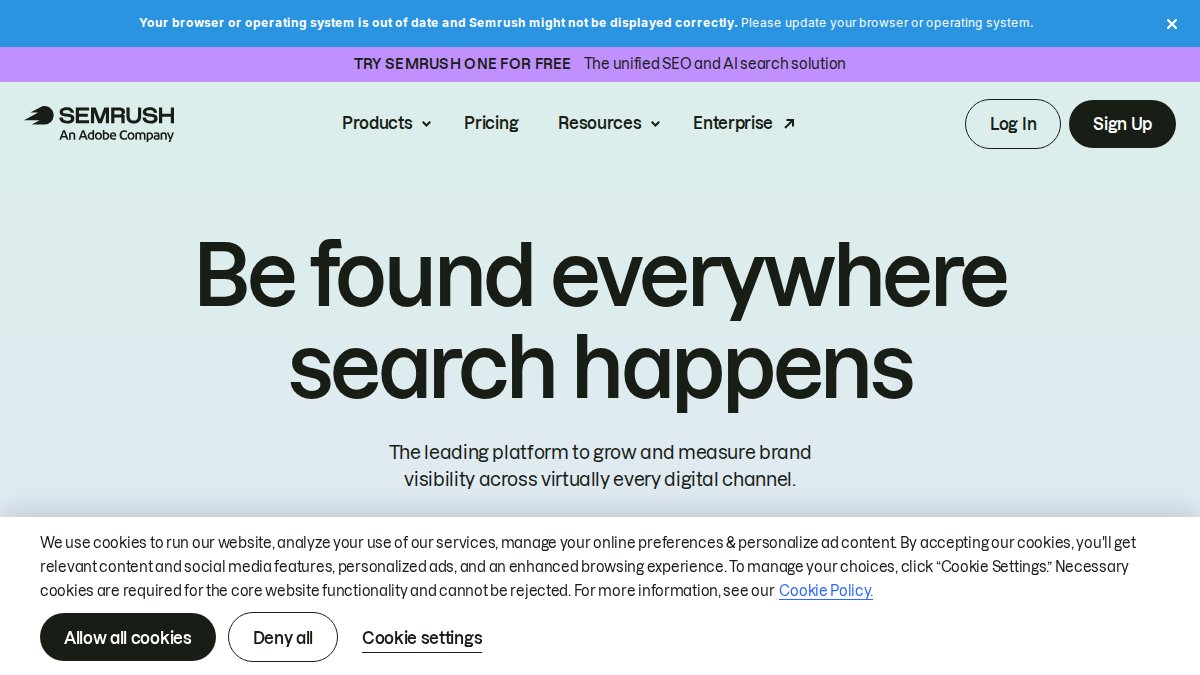
Ahrefs: Industry-Leading Backlink Automation & Rank Tracking
Ahrefs is the gold standard for backlink analysis and rank tracking automation. If your SEO strategy is built on link building and competitive analysis, no platform matches Ahrefs' data quality.
The Rank Tracker monitors keyword positions daily and surfaces winners and losers automatically. Content Explorer helps you find high-performing content ideas by analyzing what's ranking in your niche. The backlink index includes over 14 trillion backlinks, and automation features let you monitor your entire link profile continuously with alerts for new links, lost links, and competitor link pattern shifts.
Ahrefs doesn't offer a free trial, and the starting price of $129/month is a significant commitment. However, for serious link builders and competitive analysts, the investment pays for itself in time savings and strategic insights.
Best for: SEO professionals and content teams focused on link building, competitive analysis, and keyword research at scale.
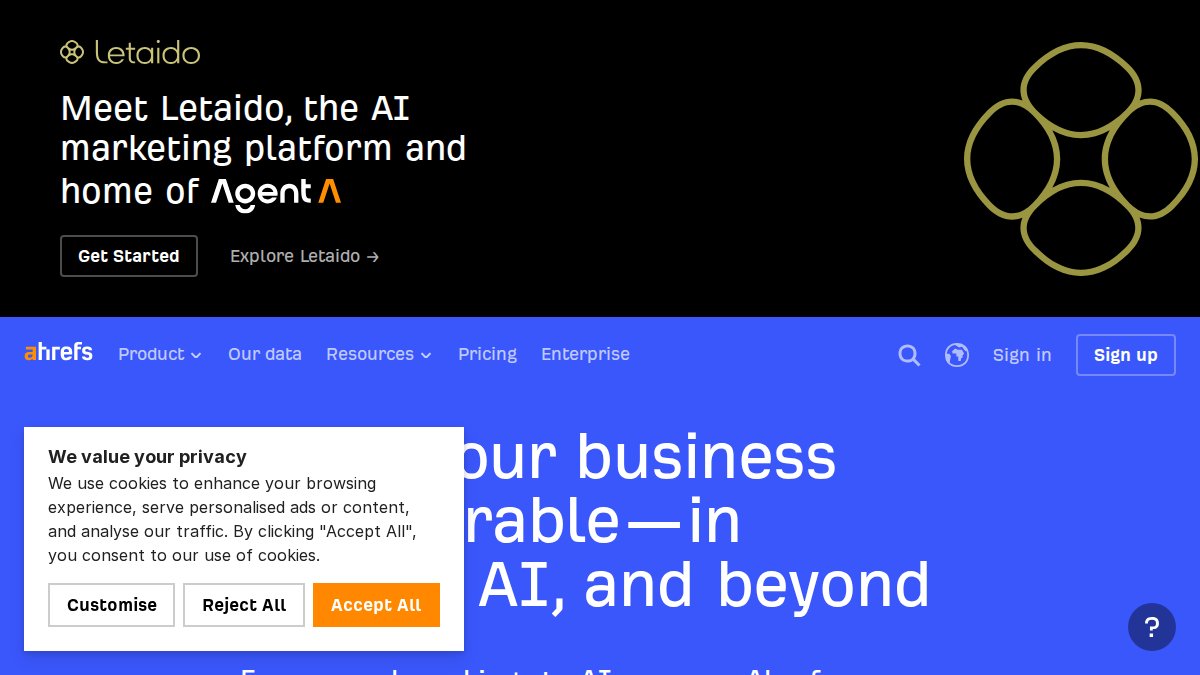
SE Ranking: Budget-Friendly Automation for Growing Teams
SE Ranking hits the sweet spot for growing agencies needing comprehensive automation without enterprise pricing. The platform includes rank tracking, site audits, backlink monitoring, and competitor research, all essentials for managing multiple client accounts.
Site audits run on schedule with clear prioritization. Rank tracking updates daily and includes local search support. White-label reporting is straightforward to set up and can be automated to send on your preferred schedule. At $55/month, you get capabilities that competitors charge $200+ for.
SE Ranking's main limitation is data depth, the keyword and backlink databases aren't as comprehensive as Ahrefs or Semrush. For most use cases this doesn't matter, but in ultra-competitive niches, the gaps become noticeable.
Best for: Small to mid-sized agencies under 50 employees that need cost-effective automation with solid reporting.
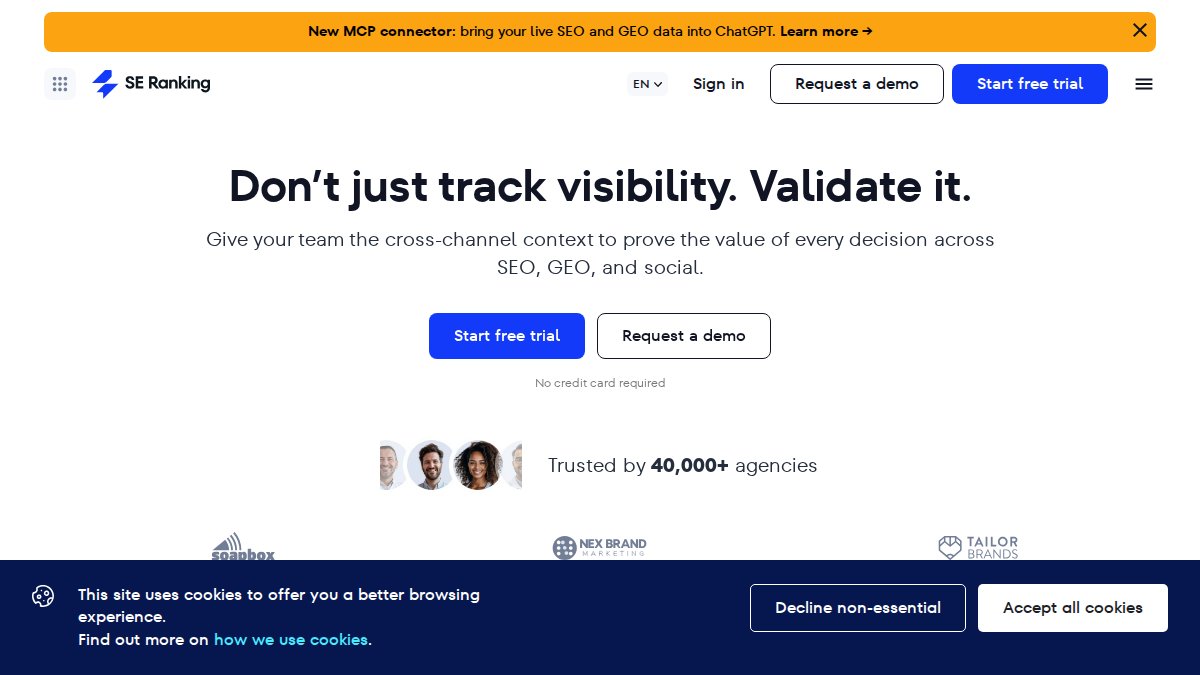
Moz Pro: Beginner-Friendly Site Audits & Rank Monitoring
Moz Pro is the most accessible entry point into seo automation software. The interface is clean, the learning curve is shallow, and support is excellent. Site crawls identify technical issues, rank tracking monitors keyword positions, and the On-Page Grader analyzes your content against top-ranking competitors.
The starting price of $49/month is the lowest among comprehensive platforms, and the free tier gives you basic rank tracking for up to 5 keywords. Moz's community and educational content make it easier for beginners than more complex platforms.
The main trade-off is feature depth. Moz Pro doesn't include backlink analysis, content marketing tools, or advanced competitor research. If you outgrow these limitations, you'll need to migrate to a more comprehensive suite.
Best for: Beginners, solo entrepreneurs, and small businesses learning SEO for the first time.
Screaming Frog: Deep Technical SEO Crawling & Automation
Screaming Frog is the technical SEO specialist's tool. This desktop application excels at deep website crawling, custom data extraction, and granular technical analysis. You can extract custom data using XPath or CSS selectors, integrate crawl data with Google Analytics and Search Console, and run scheduled crawls to monitor changes over time.
The automation features are focused on technical tasks. Schedule crawls to run daily or weekly, automatically compare crawls to detect regressions, and generate detailed reports. Integration with PageSpeed Insights pulls performance data directly into your crawl reports.
Screaming Frog's pricing is $259 per year for a single license, with a free version available for testing. For the price, you get a tool that would cost $1000+ per year if offered as a cloud service.
The main limitation is that Screaming Frog doesn't include rank tracking, backlink analysis, or keyword research. Most teams use it alongside other tools rather than as their primary platform.
Best for: Technical SEO specialists, developers, and large websites with complex crawling requirements.
BrightEdge: Enterprise AI Automation for Large-Scale Operations
BrightEdge is built for global enterprises managing thousands of pages across multiple properties. The SEO Copilot AI agent analyzes search intent, recommends optimizations, and can automatically implement changes across your CMS. The platform continuously monitors what users are searching for and what content is ranking, then recommends adjustments to your content strategy.
BrightEdge pricing is enterprise-only (contact for pricing), reflecting the scale of implementation required. Setup typically takes months and requires significant internal resources. For enterprises that can justify the investment, BrightEdge delivers automation at a scale no other platform matches.
Best for: Global enterprises and large brands with complex SEO needs and dedicated SEO teams.
Botify: AI Agents for Technical SEO & Crawl Budget Optimization
Botify specializes in technical SEO automation for large e-commerce and enterprise sites. The platform uses AI agents to automatically identify and prioritize technical issues, optimize crawl budget, and monitor site health continuously.
Log file analysis reveals how search engine crawlers interact with your site, exposing crawl budget waste and indexation issues that traditional crawling misses. Real-time alerting notifies you immediately if a critical page becomes non-indexable or crawl budget spikes. AI agents can automatically fix certain technical issues like redirecting orphaned pages or consolidating duplicate content.
Botify pricing is custom enterprise contracts. For large e-commerce sites or news publishers managing millions of pages, Botify's automation capabilities justify the investment.
Best for: Large e-commerce sites, news publishers, and enterprises managing millions of pages where crawl budget and indexation are critical.
SEO Automation Tools for Agencies: Workflow & Reporting
Agency work is 40% client reporting, 40% strategy, and 20% actual optimization. SEO automation software transforms that ratio by eliminating manual reporting and freeing up time for strategy.
The best agency automation platforms let you create client-specific dashboards that update automatically, schedule report delivery on your preferred cadence, and brand everything with your agency logo. White-label reporting eliminates the weekly ritual of pulling data, formatting reports, and sending emails. Instead, reports populate themselves and go out on schedule.
According to Forrester's 2026 Agency Automation Study, agencies using seo automation software see 35% improvement in client satisfaction because reporting is more timely and consistent. For a 5-person agency, reclaiming 10-15 hours per week is equivalent to hiring another full-time employee.
SEO Task Automation Examples: What You Can Actually Automate
Rank Tracking is the easiest automation win. Set it up once and it runs forever, saving 3-5 hours per week. Technical Site Audits are the second easiest, schedule crawls weekly or daily and the platform identifies issues automatically, saving 4-6 hours per week.
Meta Tag Generation automates title tags and meta descriptions by analyzing your content and top-ranking competitors, saving 10+ hours per week for large sites. Content Optimization Recommendations analyze competitors and identify content gaps, accelerating content creation by 30-40%.
Backlink Monitoring tracks new links, lost links, and competitor patterns continuously, saving 2-3 hours per week. Competitor Tracking monitors competitor rankings, content updates, and backlink changes with alerts for significant moves. Internal Linking Suggestions recommend links based on semantic relevance.
Reporting and Data Export is completely automatable, saving 1-2 hours per week.
What you generally can't automate: strategy decisions, client communication, complex content writing, and relationship management. Automation handles execution; humans handle judgment.
How to Automate SEO Reporting: Dashboards & Client Delivery
Manual reporting is the biggest time drain in agency SEO. For a 20-client agency, that's 40-60 hours per week of pure administrative work. Automated reporting eliminates this entirely.
Step 1: Define Your Metrics. Focus on 5-7 that directly relate to client goals: organic traffic, keyword rankings, conversions from organic, backlink growth, and technical health.
Step 2: Design Your Report Template. Create a template once with your branding, client name, and metric layout. The platform will populate it with data automatically.
Step 3: Set Your Delivery Schedule. Monthly is standard, but some agencies do weekly or quarterly. Set it once and the platform handles delivery automatically.
Step 4: Configure Automated Alerts. Set thresholds for metrics that matter. If organic traffic drops 20%, flag it. If a major keyword loses rankings, alert the team.
Step 5: Test and Iterate. Run a test report for one client, review it, and refine the template before rolling out to all clients.
You reclaim 10-15 hours per week that you can reinvest in strategy or growth. Clients also see more consistent, timely reporting, which improves satisfaction. Semrush and SE Ranking have the best white-label reporting. GrandRanker's reporting is simpler but sufficient for small teams.
SEO Automation Best Practices: Security, Privacy & Negative SEO Risks
Automation is powerful, but it introduces risks. An automated system making bad decisions affects hundreds of pages simultaneously.
Security and Data Privacy are the first concern. Ensure the platform uses OAuth authentication (not username/password), encrypts data in transit and at rest, and has transparent privacy policies. Review the platform's compliance certifications before connecting your accounts.
Negative SEO Risks come from automation making decisions without human oversight. If your automation platform aggressively optimizes for keyword density, it might generate spammy content that triggers penalties. The mitigation is simple: always review automated changes before they go live. Use a staging environment to test changes before deploying to production.
CMS Integration Risks emerge when automation can directly modify your website. Test integrations thoroughly in a non-production environment first. Start with read-only access and only grant write access once you've verified the platform's behavior.
Data Accuracy Risks happen when automation relies on incomplete data. Verify that the platform's data matches your own analytics and Search Console data before trusting it for major decisions.
Algorithm Risk is the most subtle. Over-reliance on automation can leave you vulnerable to algorithm shifts because you're not building diverse, human-centric content strategies. Use automation as a tool within a broader strategy, not as a replacement for strategic thinking.
Best Practice Workflow:
- Automate data collection and analysis, not decisions
- Review all automated recommendations before implementation
- Test changes in staging before deploying to production
- Monitor results closely after deploying automated changes
- Maintain a manual backup process in case automation fails
- Update automation rules quarterly as search algorithms evolve
How to Choose the Right SEO Automation Platform
The right platform depends on your team size, budget, and specific needs.
For Solo Founders: GrandRanker if you want to automate content creation and organic growth. Moz Pro if you want basic rank tracking and site audits. SE Ranking if you want comprehensive features at a low price.
For Small Agencies (2-5 People): SE Ranking offers the best value at $55/month. Semrush is the premium option if you need more comprehensive features.
For Growing Agencies (5-20 People): Semrush becomes the better choice because white-label reporting and comprehensive features justify the cost. Ahrefs is essential if link building is a major service.
For Large Agencies (20+ People): BrightEdge or Botify if you're managing enterprise clients. Semrush if you want a more affordable all-in-one platform. Most large agencies use multiple platforms.
Evaluation Framework:
- Budget: How much can you spend monthly?
- Scale: How many clients or keywords are you tracking?
- Automation Depth: Do you need basic reporting automation or full content automation?
- Data Depth: Do you need comprehensive backlink data or is basic rank tracking sufficient?
- Integration: Does the platform integrate with your CMS and other tools?
- Support: Do you need hands-on support or are you comfortable with self-service?
- Learning Curve: How much time can you invest in setup and training?
Most teams start with one platform and add others as they scale. Start with the platform that solves your most pressing problem, then expand from there.
Frequently Asked Questions
What is SEO automation software and how does it work?
SEO automation software uses AI and machine learning to handle repetitive SEO tasks automatically. These platforms automate keyword research, site audits, rank tracking, content optimization, and reporting. Instead of manually checking rankings daily or auditing your site monthly, automation software schedules these tasks to run continuously, delivering data-driven insights without constant manual intervention. This allows teams to focus on strategy while the platform handles execution.
Which SEO tasks should be automated and which shouldn't?
Safe to automate: rank tracking, site audits, backlink monitoring, technical SEO crawls, meta tag generation, and reporting. Tasks requiring human judgment: content strategy, link outreach decisions, competitive positioning, and user intent interpretation. SEO automation software works best when it handles data collection and pattern detection, while your team makes strategic decisions. Over-automating content creation without human review risks low-quality output that damages rankings.
How do SEO automation tools help agencies scale client work?
SEO automation tools for agencies enable white-label reporting, scheduled audits across multiple client sites, and automated rank tracking dashboards. Instead of manually compiling reports for each client, automation software generates customizable reports automatically. This lets agencies serve more clients without proportionally increasing staff. Platforms like Semrush and SE Ranking offer agency-specific features like team collaboration, client portal access, and bulk project management that make scaling efficient and cost-effective.
Is SEO automation safe for Google rankings?
SEO automation is safe when used responsibly. Automating technical audits, rank tracking, and data analysis doesn't violate Google's guidelines. However, automating low-quality content creation, aggressive link schemes, or keyword stuffing will damage rankings. The key: use automation for data-driven insights and optimization recommendations, but maintain human review for content and outreach decisions. Ethical SEO automation software focuses on workflow efficiency, not manipulation, and includes safeguards against negative SEO practices.
Choosing the right seo automation software is one of the highest-ROI decisions you can make for your SEO program. The time savings alone justify the investment, but the real value comes from the consistency and data quality that automation enables. If you're ready to eliminate manual SEO busywork and scale your organic growth, GrandRanker offers the most comprehensive automation for founders and small teams. Start your free trial today and see how much time you can reclaim for strategic work.
This article was written using GrandRanker