 ultimate-guide
How to Rank on Google: A 2026 Step-by-Step Guide
Table of Contents
- How to Rank on Google: The Core Framework
- How to Do Keyword Research for Google Rankings
- On-Page SEO Checklist: Optimizing Your Content
- Technical SEO: Building a Crawlable Site Architecture
- How Long Does It Take to Rank on Google?
- Building Backlinks and Domain Authority
- Best Free SEO Tools to Monitor Your Rankings
- Post-Algorithm Update Recovery: Staying Ahead
- Zero-Click Search Optimization and SERP Features
- Common Ranking Mistakes to Avoid
How to Rank on Google: A 2026 Step-by-Step Guide
Last Updated: July 1, 2026
Learning how to rank on Google requires understanding how search engines evaluate content, websites, and user experience signals. This guide walks you through the exact framework that drives organic visibility in 2026, from keyword research through backlink strategy and beyond.
How to Rank on Google: The Core Framework
Google's ranking algorithm evaluates roughly 200 signals, but they collapse into five categories that matter most.
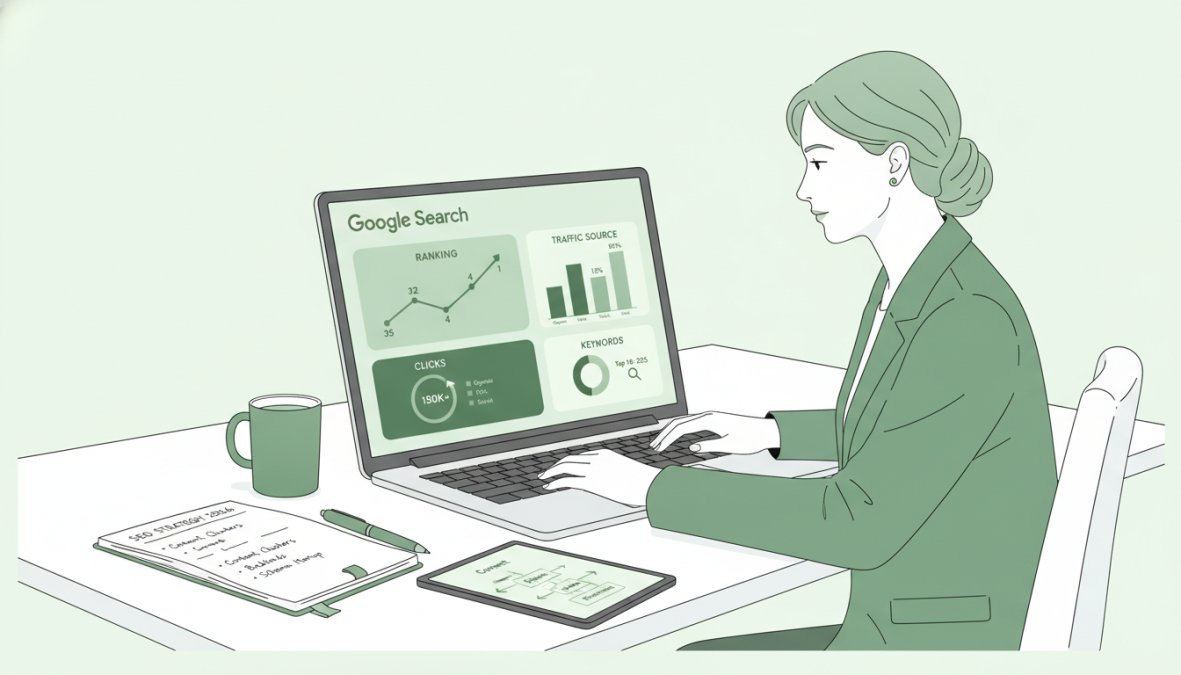
Relevance means your content matches what people are actually searching for. If you're targeting "email marketing automation" but your page focuses on email templates, Google will route traffic elsewhere.
Authority is measured through backlinks, domain history, and E-E-A-T (Experience, Expertise, Authoritativeness, Trustworthiness). A page with 50 referring domains will typically outrank one with zero backlinks.
User experience signals now carry enormous weight. Core Web Vitals, page speed, visual stability, and interactivity, directly influence rankings. A site loading in 1.2 seconds will rank above one loading in 5 seconds.
Content quality goes beyond grammar. Google detects shallow content versus deep, original research. A 2,500-word guide with original insights will outrank a 300-word article on competitive topics.
Search intent alignment is critical. Google categorizes searches as informational, navigational, commercial, or transactional. A search for "best email marketing tools" is commercial intent; a how-to guide on email basics won't rank.
How to Do Keyword Research for Google Rankings
Keyword research determines what you'll write about and how you'll structure it. The goal is finding keywords where you can realistically rank within 3-6 months.
Start with seed keywords: broad terms related to your business. From these, branch into long-tail keywords, typically 3-5 words with lower search volume but higher commercial intent and lower competition. "Digital marketing agency Ljubljana" is a long-tail keyword where a new site can rank within 90 days.
According to Ahrefs' 2026 SEO research, long-tail keywords account for 70% of search traffic but receive 30% of the backlinks, creating opportunity for new sites.
Finding Long-Tail Keywords with Low Competition
Use a spreadsheet with columns for: keyword, monthly search volume, keyword difficulty (0-100 scale), and search intent.
Google Search Console shows which keywords already drive traffic to your site and which rank on page 2-3, your quick wins. Google's autocomplete reveals what people actually search for. Answer the Public (free tier) aggregates questions people ask about your topic, ideal for blog content.
Keyword difficulty matters more than volume. A keyword with 500 monthly searches and difficulty 15 is worth more than one with 5,000 searches and difficulty 75. You'll rank the first in 60 days; the second might take 18 months.
Analyzing Search Intent for Your Target Keywords
Before writing, search your target keyword on Google and study the top 10 results.
Are they blog posts, product pages, or category pages? If the top 10 are all product comparisons and you're writing a how-to guide, you've mismatched intent. What's the average word count? If top results average 3,500 words, your 800-word article will struggle. What angle do they take? Pick the angle that fills a gap in your expertise.
Do results include featured snippets, local packs, or video? Featured snippets are 40-60 word answer blocks appearing above organic results. If your keyword triggers one, structure your content to claim it.
On-Page SEO Checklist: Optimizing Your Content
On-page SEO includes title tags, meta descriptions, headers, keyword placement, and content structure.
Title tags are the single most important on-page element. Google weights them heavily for relevance. Your title should include your target keyword and be compelling enough to earn clicks. A good title is 50-60 characters, includes the keyword early, and promises a specific benefit: "How to Rank on Google in 2026: The Complete Step-by-Step Guide" works better than "Google Rankings."
Meta descriptions don't directly impact rankings but influence click-through rate. Write a 150-160 character description that summarizes the page and includes the keyword naturally.
Meta Tags, Title Tags, and Header Optimization
Headers (H1, H2, H3) structure your content for readers and search engines. Use only one H1 per page, matching your title tag. Use H2s for major sections and H3s for subsections. Headers should include keywords naturally, not forced.
The first 100 words of your content are weighted more heavily for relevance. Include your target keyword in the first paragraph naturally.
Keyword Density and Content Relevance Best Practices
Keyword density rules are outdated. Google now evaluates semantic relevance. Use variations and related terms: if your target is "how to rank on google," also use "ranking on Google," "improve Google rankings," and "get ranked on Google."
Write for humans first, search engines second. Content optimized for keyword density but awkward to read will have high bounce rates, signaling poor satisfaction to Google.
Include related keywords and concepts naturally. Mention search intent, backlinks, content quality, technical SEO, and user experience. These semantic terms signal comprehensive coverage.
Technical SEO: Building a Crawlable Site Architecture
Technical SEO is the infrastructure allowing Google to crawl, index, and rank your site. Poor technical SEO can tank otherwise excellent pages.
Site architecture determines how Google navigates your content. No page should be more than 3 clicks from the homepage. XML sitemaps tell Google which pages exist and when they were last updated; submit yours to Google Search Console. Robots.txt controls which parts of your site Google can crawl.
Mobile-First Indexing and Core Web Vitals
Google now indexes the mobile version of your site first, even for desktop rankings. If your mobile site is slow or broken, rankings suffer.
Core Web Vitals are three measurements Google uses to evaluate user experience:
Largest Contentful Paint (LCP) measures loading speed. Pages should load in under 2.5 seconds; above 4 seconds is poor.
Cumulative Layout Shift (CLS) measures visual stability. Keep CLS under 0.1 to prevent frustrating element shifts.
Interaction to Next Paint (INP) measures responsiveness. Keep INP under 200 milliseconds.
Use Google PageSpeed Insights (free) to check your Core Web Vitals. Most improvements come from image optimization, lazy loading, and reducing render-blocking JavaScript.
Schema Markup and Structured Data Implementation
Schema markup tells Google what your content is about. For most content, use Article, BlogPosting, FAQPage, or HowTo schema types.
Add FAQ schema if your page has a Frequently Asked Questions section. Add HowTo schema for step-by-step guides with specific structure: steps with titles, descriptions, and images. Implement schema using JSON-LD format, which most modern CMS platforms handle automatically.
How Long Does It Take to Rank on Google?
Realistic timelines depend on competition level:
Low-competition keywords (difficulty 0-20): 30-60 days. These are typically long-tail keywords with 100-500 monthly searches.
Medium-competition keywords (difficulty 20-50): 90-180 days. You'll need multiple backlinks and strong content.
High-competition keywords (difficulty 50-80): 6-12 months. Requires exceptional content and significant backlink building.
Very high-competition keywords (difficulty 80+): 12-24 months or longer. Even established sites struggle here.
Timeline also depends on domain age and authority. A 10-year-old domain with strong backlinks will rank faster than a brand-new site, due to the "sandbox effect" where Google gives new domains a probationary period.
Accelerating Rankings with Authority and E-E-A-T
Authority accelerates rankings. A page with 20 backlinks will rank faster than an identical page with 2 backlinks.
Build topical authority by creating comprehensive content clusters on related topics. If you write about email marketing, create content on segmentation, automation, deliverability, and best practices. Link these together internally.
Author bylines and bios help. Publishing under your name with a detailed bio lets Google associate expertise with you. Brand mentions also signal authority; when other sites mention your brand without linking, Google registers this as a trust signal.
Building Backlinks and Domain Authority
Backlinks are links from other websites to yours. They're one of Google's top three ranking factors. Domain authority (DA) is a 0-100 score predicting how well a domain will rank, calculated from backlink quantity and quality.
Ethical Link-Building Strategies That Work
The most reliable strategy is creating content worth linking to. Original research, comprehensive guides, and unique data attract backlinks naturally.
Conduct original research relevant to your industry. Publish findings and reach out to journalists and bloggers covering that topic. Comprehensive guides of 3,000+ words with original frameworks attract 2-3x more backlinks than shorter content.
Identify broken backlinks on competitor sites using tools like Ahrefs or SEMrush, then reach out suggesting your content as a replacement. Guest post on higher-authority sites in your industry. Participate in industry communities and forums, answering questions and mentioning your content when relevant.
Avoiding Penalties: What Not to Do
Buying backlinks violates Google's guidelines and results in penalties. Link exchanges and private blog networks (PBNs) are also penalized. Low-quality directories and article submission sites don't help.
Focus on quality over quantity. One backlink from a DA 50 site is worth more than 50 from DA 5 sites. Target authoritative sites in your industry.
Best Free SEO Tools to Monitor Your Rankings
Google Search Console and Analytics Essentials
Google Search Console shows which keywords drive traffic, which pages rank for which keywords, and impression/click data. Use it to identify quick wins: keywords where you rank on page 2-3.
Google Analytics shows how visitors interact with your site. Track bounce rate, session duration, and conversion rate. High bounce rate suggests unsatisfying content; low session duration suggests thin content.
Budget-Friendly Alternatives to Premium Platforms
Ubersuggest offers a free tier with keyword research and site audit functionality (3 free searches daily). Moz's free tools include keyword explorer, rank checker, and backlink analyzer. SEMrush has a limited free tier. AnswerThePublic is free and invaluable for finding question-based keywords. Screaming Frog's free version crawls up to 500 pages and identifies technical SEO issues.
Most premium tools have free tiers sufficient for small teams. Start with free and upgrade only when it becomes a bottleneck.
Post-Algorithm Update Recovery: Staying Ahead
Google releases algorithm updates regularly. The March 2024 Helpful Content Update deprioritized thin, AI-generated content and prioritized original research and human expertise.
Content Quality Over Keyword Density
Quality always wins. One excellent, original article is worth 10 mediocre AI-generated pieces.
Original research attracts backlinks and mentions. Unique frameworks and methodologies give competitive advantage. Deep expertise signals matter more than ever; demonstrate you've actually worked in your field with specific examples.
AI-Generated Content Strategy for 2026
Use AI as a tool, not a replacement. Use AI to draft outlines, generate topic ideas, and create first drafts. Then heavily edit, fact-check, and rewrite to add original insights.
Never publish AI-generated content as-is. Google's systems detect content lacking original thought and deprioritize it. Use AI to speed up research and repurpose existing content, freeing you to focus on original analysis.
Zero-Click Search Optimization and SERP Features
Zero-click searches are searches where users find answers in search results without clicking through. Featured snippets, knowledge panels, and local results are examples. According to Semrush's 2026 SERP features analysis, featured snippets appear in roughly 13% of searches.
Claiming Featured Snippets and Knowledge Panels
Featured snippets are 40-60 word answer blocks triggered by question-based queries. Structure your content to answer the question in 40-60 words in the first paragraph after your H2 heading.
Format matters. Paragraph snippets answer "What is" questions. List snippets answer "How to" or "Best" questions. Table snippets appear for comparison queries. Analyze the current snippet for your keyword, then create slightly better, more complete content.
Knowledge panels are information boxes on the right side of search results. You can't directly claim them, but you can influence them through authoritative content and correct schema markup.
Local Ranking Signals for Business Profiles
For location-based businesses, local SEO is critical. Complete your Google Business Profile fully: business name, address, phone, website, hours, photos, and description.
Get reviews. Businesses with 50+ recent reviews rank higher than those with 5. Local citations (mentions of your business name, address, and phone on other websites) matter; consistency across citations is important. Local backlinks from other businesses and organizations in your area boost local rankings.
For businesses in specific regions, local SEO is often the fastest path to rankings with lower competition and higher intent.
| Local SEO Element | Impact on Rankings | Effort Required |
|---|---|---|
| Google Business Profile Completion | High | Low |
| Review Quantity and Recency | High | Medium |
| Local Citations | Medium | Medium |
| Local Backlinks | Medium | High |
| Website Local Content | Medium | Medium |
Common Ranking Mistakes to Avoid
Targeting the wrong keywords: Verify keyword competition matches your domain authority before writing.
Ignoring search intent: Study the top 10 results before writing to ensure your content matches what searchers want.
Publishing thin content: Aim for 2,000+ words for competitive keywords. Content depth is a ranking signal.
Neglecting technical SEO: Fix Core Web Vitals, ensure mobile-friendliness, and implement basic schema markup.
Not building backlinks: Spend 30% of SEO effort on link building. Authority comes from backlinks.
Publishing and abandoning: Update old posts with new data, improve near-miss keywords, and add internal links as you publish new content.
Focusing on branded keywords: Target non-branded keywords that bring new audiences, not just your brand name.
Ignoring analytics: Track which pages drive traffic, which keywords convert, and which content underperforms.
Frequently Asked Questions
How long does it take to rank on Google for competitive keywords?
Ranking timelines vary significantly based on competition level and your domain authority. For low-competition long-tail keywords, you may see results in 1-3 months. High-competition keywords typically require 6-12 months of consistent effort with quality content, backlinks, and technical SEO optimization. New domains generally take longer than established sites. Focus on building E-E-A-T signals and relevant backlinks to accelerate your timeline.
What is the most important ranking factor for how to rank on Google?
Content quality and relevance remain the strongest ranking signals. Google's algorithms prioritize pages that thoroughly answer search intent and provide genuine value. Backlinks and domain authority are also critical, they signal trustworthiness. Technical SEO (site speed, mobile-first indexing, crawlability) ensures Google can properly index your content. E-E-A-T (Expertise, Experience, Authoritativeness, Trustworthiness) has become increasingly important, especially for YMYL content.
How do I do keyword research to find terms I can actually rank for?
Start by identifying long-tail keywords with lower search volume and competition. Use free tools like Google Search Console and Google Keyword Planner to understand search intent and volume. Analyze the top-ranking pages for your target keywords, if they're from high-authority domains, consider less competitive variations. Look for keyword gaps where competitors aren't optimizing. Focus on keywords that match your domain authority level and content expertise to maximize ranking potential.
Which best free SEO tools should I use to track my Google rankings?
Google Search Console is essential, it shows your keywords, click-through rates, and indexing status. Google Analytics tracks organic traffic and user behavior. For keyword tracking, tools like Ubersuggest's free tier and Semrush's free version offer limited but valuable data. Screaming Frog's free crawler helps audit technical SEO. These free tools cover keyword research, ranking monitoring, and technical audits without requiring premium subscriptions, making them ideal for bootstrapped teams.
Learning how to rank on google is achievable for any business, regardless of size or budget. The challenge isn't understanding the principles, it's executing consistently while managing other priorities. GrandRanker automates keyword research, content optimization, and performance tracking so you can focus on strategy instead of manual tasks. Start with a free trial and see how much faster you can build organic traffic when you have the right tools and framework in place.
This article was written using GrandRanker