 listicle
Enterprise SEO Software: Complete 2026 Buyer's Guide
Table of Contents
- What Is Enterprise SEO Software?
- Enterprise SEO Platform Features That Matter
- Top Enterprise SEO Software Solutions for 2026
- GrandRanker: AI-Powered Automation for Growth
- BrightEdge: Enterprise-Scale Content Intelligence
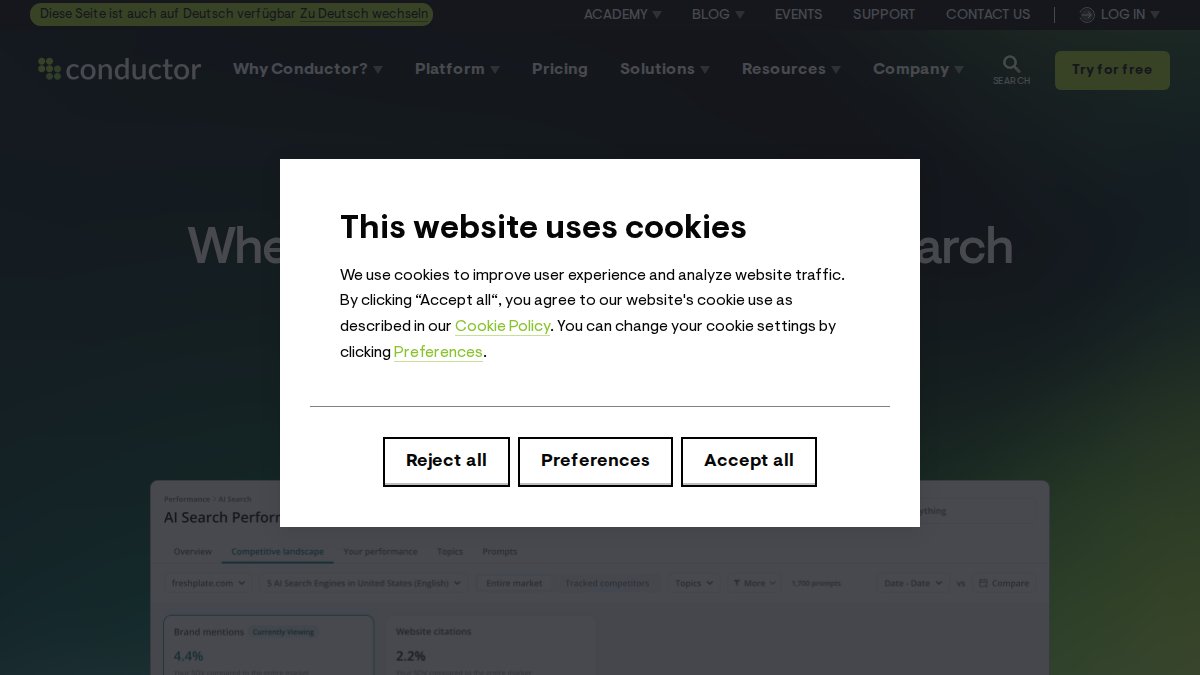
- Conductor: Content-Led SEO and Revenue Alignment
- seoClarity: Unified Data and Unlimited Scaling
- Botify: Technical SEO at Massive Scale
- Semrush Enterprise: All-in-One Marketing Suite
- Ahrefs Enterprise: Competitive Research and Backlinks
- Lumar: Technical Health and Performance Monitoring
- Clearscope: AI-Driven Content Optimization
- Quick Comparison Table: Enterprise SEO Software
- Calculating Enterprise SEO ROI: What to Measure
- AI Search Visibility Tools and Answer Engine Optimization
- Implementation Roadmap: Avoiding Common Pitfalls
- How to Choose the Right Enterprise SEO Software
- Conclusion
Last Updated: June 30, 2026
Enterprise SEO software automates repetitive work, keyword research, technical audits, rank tracking, content optimization, while surfacing strategic insights that drive results. The challenge isn't finding tools; it's choosing the right platform that matches your architecture, team structure, and growth targets without overpaying for unused features. This guide breaks down what separates best-in-class enterprise SEO software from the rest and shows you how to calculate ROI.
What Is Enterprise SEO Software?
Enterprise SEO software is a unified platform designed to manage search visibility across large-scale operations: thousands of pages, multiple domains, distributed teams, and complex technical requirements. Unlike consumer-grade tools, enterprise platforms handle unlimited keyword tracking, massive site crawls, API-first architectures, and role-based access controls.
The core distinction is scalability and data aggregation. Enterprise SEO software consolidates rankings, technical health, content performance, and competitive intelligence into a single source of truth, eliminating the chaos of managing five different tools with incompatible data formats. According to McKinsey's 2026 digital transformation report, organizations that unify their marketing technology stack see 34% faster decision-making and 28% higher campaign ROI.
When tracking 50,000 keywords across 10 domains with distributed teams, you need infrastructure that scales. You need APIs connecting to your CMS and data warehouses, role-based permissions so teams can't accidentally delete configurations, and unified dashboards across all SEO pillars.
Enterprise SEO Platform Features That Matter
Workflow Automation and Team Collaboration
The best enterprise SEO software removes manual handoffs between teams. Workflow automation means tasks trigger automatically based on data conditions, and collaboration features ensure everyone sees the same version of truth.
Look for platforms that integrate with your existing tools. If your team uses Slack, the platform should send alerts there. If you use Jira, SEO recommendations should flow into sprint planning. If content lives in WordPress or a custom CMS, the platform should connect via API so optimization recommendations appear where writers work.
Teams using workflow automation report completing audits 60% faster and reducing back-and-forth communication by roughly half.
API Integration and CMS Limitations
Enterprise organizations use multiple platforms: a CMS, data warehouse, analytics systems, and internal tools. Enterprise SEO software must integrate with all of these without requiring engineering effort for every connection.
The best platforms offer REST APIs and webhooks that let you push and pull data programmatically. This means custom dashboards in your existing BI tools, SEO data fed into revenue attribution models, or automatic content updates when rankings drop.
Before committing, verify that the platform's content optimization features work with your actual CMS. If you're running a headless commerce platform or custom-built system, test the integration thoroughly. A platform that can't talk to your CMS becomes a reporting tool, not an operational system.
Scalability and Data Aggregation
Scalability means three things: unlimited keyword tracking, handling massive site crawls without slowdown, and aggregating data across multiple properties without artificial limits.
Many mid-market tools cap you at 10,000 keywords or charge per-keyword overages. Enterprise platforms should offer unlimited tracking as standard. The same applies to site crawling, a 500,000-page website needs a crawler that processes it without timing out.
Data aggregation means bringing together rankings, traffic, technical health, backlinks, and content metrics into unified dashboards. The best enterprise SEO software treats your entire digital presence as one interconnected system.
Top Enterprise SEO Software Solutions for 2026

GrandRanker: AI-Powered Automation for Growth
GrandRanker stands out for its AI-first approach to enterprise SEO automation. The platform automates the entire content workflow from keyword research through optimization to publishing. Instead of manual keyword clustering, GrandRanker's AI identifies high-intent keyword clusters and generates optimization recommendations automatically.
The platform excels at connecting SEO to revenue by tracking which keywords and content pieces drive actual customers, not just traffic. This lets your team focus on the 20% of keywords generating 80% of revenue. For founders and marketing leaders managing lean teams, this is transformative.
GrandRanker also addresses a gap most platforms ignore: getting cited by AI assistants. As ChatGPT, Claude, and other AI systems become primary discovery channels, ranking in Google alone isn't enough. GrandRanker helps you structure content so AI systems cite you as an authoritative source.
The platform offers a free trial and free plan, making it accessible for testing before committing.
Best for: Founders and small-to-medium teams needing AI-powered automation without enterprise complexity or price tags.
BrightEdge: Enterprise-Scale Content Intelligence
BrightEdge is purpose-built for global enterprises managing massive content operations. The platform's Data Cube provides keyword intelligence at unprecedented scale, and ContentIQ handles large-scale technical site auditing.
What sets BrightEdge apart is tying SEO to business outcomes. The platform correlates search visibility with revenue, allowing you to justify SEO investments in terms your CFO understands. Executive dashboards show not just rankings, but revenue impact.
The learning curve is steep, and onboarding typically takes months. Pricing starts around $127K annually, making it an investment requiring organizational commitment.
Best for: Global brands requiring deep content performance analytics and answer engine optimization at massive scale.
Pros:
- Industry-leading breadth of data and features
- Strong focus on tying SEO efforts to business impact
Cons:
- High cost and complex onboarding process
Conductor: Content-Led SEO and Revenue Alignment
Conductor excels at connecting content teams with search visibility and revenue tracking. The platform is built around the reality that modern SEO is driven by content strategy. Its workflow management tools are best-in-class for distributed content teams.
The unified platform aggregates SEO, content, and digital marketing data, eliminating the need to stitch together multiple tools. Collaboration features let editors, strategists, and technical teams work together without stepping on each other's toes.
Where Conductor falls short is technical SEO depth. If your primary challenge is crawl budget optimization or indexation management, a specialized crawler like Botify might serve you better.
Best for: Content-led in-house teams looking to bridge the gap between SEO and revenue.
Pros:
- Excellent workflow and collaboration features
- Strong alignment between SEO and content strategy
Cons:
- Less emphasis on deep technical SEO compared to specialized crawlers
seoClarity: Unified Data and Unlimited Scaling
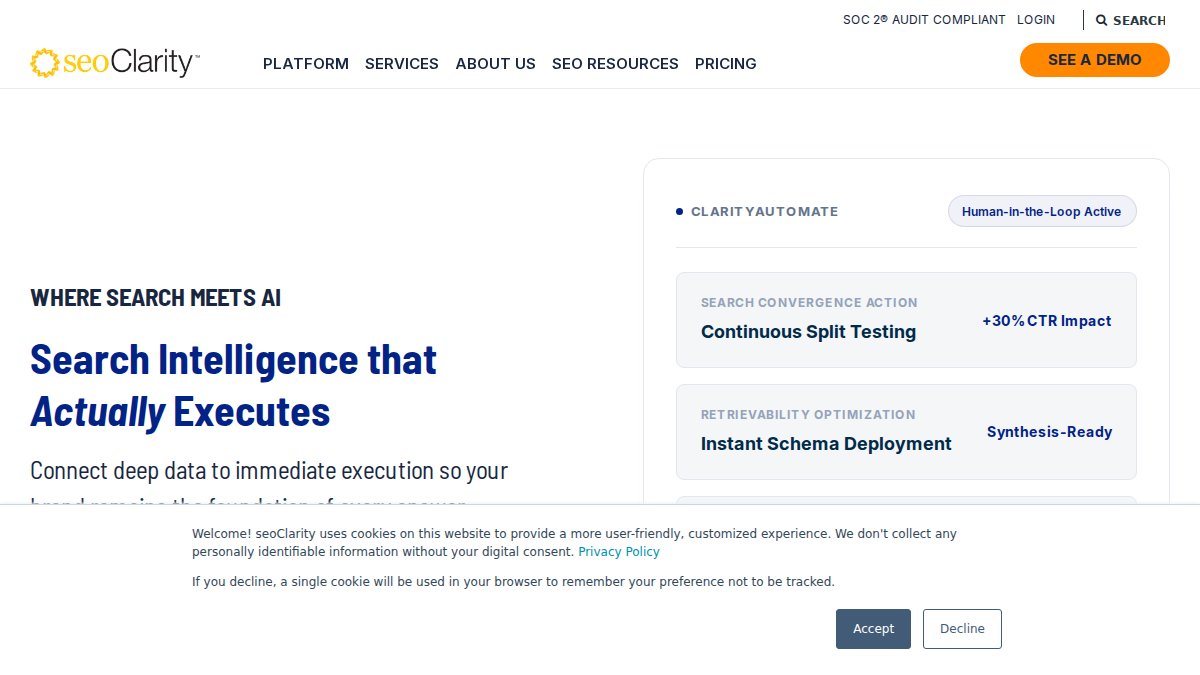
seoClarity positions itself as a single source of truth for enterprise SEO. The platform aggregates rankings, content, technical, and analytics data without artificial limits. Unlike competitors that cap keyword tracking or charge overages, seoClarity's transparent pricing model scales with your data needs.
The platform handles unlimited rank tracking and site crawling, which matters when managing thousands of keywords across multiple markets. Advanced content gap analysis and topic modeling help identify untapped opportunities.
The learning curve is real. Budget time for proper training and implementation.
Best for: Large organizations needing a unified, scalable source of truth without artificial usage limits.
Pros:
- Transparent, scalable pricing model
- Comprehensive data aggregation across all SEO pillars
Cons:
- Steep learning curve for new users
Botify: Technical SEO at Massive Scale
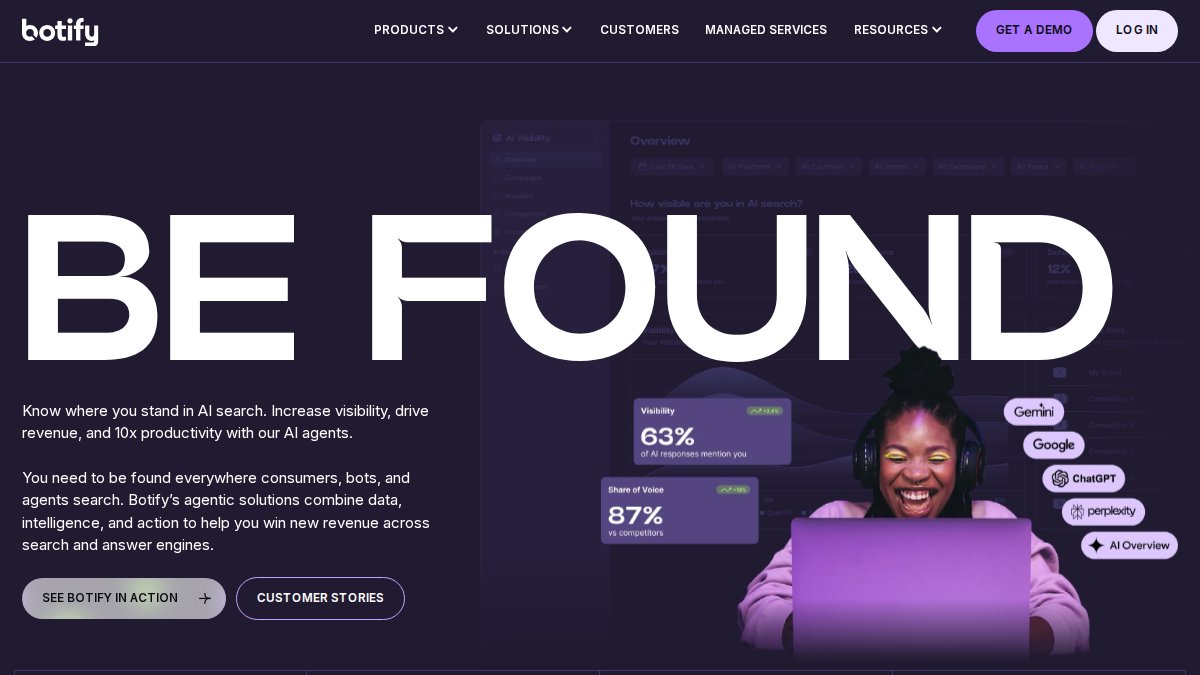
Botify is the specialist's choice for large-scale technical SEO. If you're managing a site with 500,000+ URLs and facing crawl budget constraints, Botify's log file analysis and crawl optimization tools are unmatched.
The platform analyzes how search engines actually crawl your site by parsing server logs, then identifies opportunities to improve crawl efficiency. This level of technical depth is critical for massive properties where wasted crawl budget costs thousands in lost visibility.
Botify requires a dedicated technical owner who understands crawl, indexation, and server logs.
Best for: Enterprises with massive websites (500K+ URLs) facing complex crawl or indexation issues.
Pros:
- Best-in-class technical SEO and log analysis
- Highly effective for managing crawl budget at scale
Cons:
- Overkill for smaller sites; requires a dedicated technical owner
Semrush Enterprise: All-in-One Marketing Suite
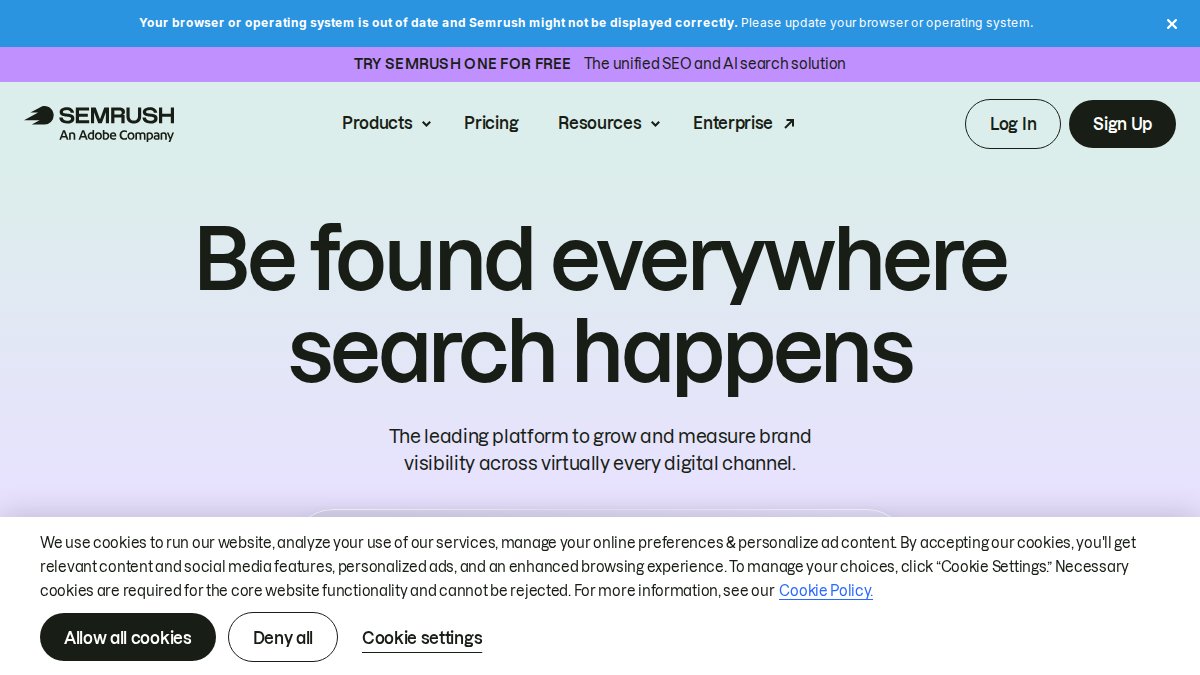
Semrush Enterprise provides breadth across SEO, PPC, content, and competitive research in a single platform. For organizations running integrated marketing campaigns, having all channels in one system reduces tool sprawl and simplifies reporting.
The keyword database is extensive, and competitive intelligence features help you understand what competitors rank for. API access is strong, enabling custom integrations and data pipelines.
The tradeoff is depth. Semrush is a generalist tool. For specialized challenges like technical SEO at massive scale or answer engine optimization, you'll likely need supplementary tools.
Best for: Cross-channel marketing teams needing a versatile, all-in-one suite.
Pros:
- Broadest set of marketing tools in one platform
- Extensive API access for custom data pipelines
Cons:
- Not purpose-built for AI search visibility compared to niche tools
Ahrefs Enterprise: Competitive Research and Backlinks
Ahrefs is renowned for its massive backlink index and competitive domain research. If your strategy revolves around understanding competitor backlinks and identifying link opportunities, Ahrefs provides unmatched depth.
The platform's site auditing and keyword research are solid, though not best-in-class compared to specialized tools. The interface is intuitive, making it accessible to teams without deep SEO technical knowledge.
Ahrefs lacks native workflow and content governance features. It's a research and analysis tool, not an operational platform.
Best for: Organizations prioritizing backlink authority, competitive research, and link-led SEO strategies.
Pros:
- Best-in-class backlink and keyword data
- Highly intuitive interface for deep analysis
Cons:
- Lacks native workflow and content governance features

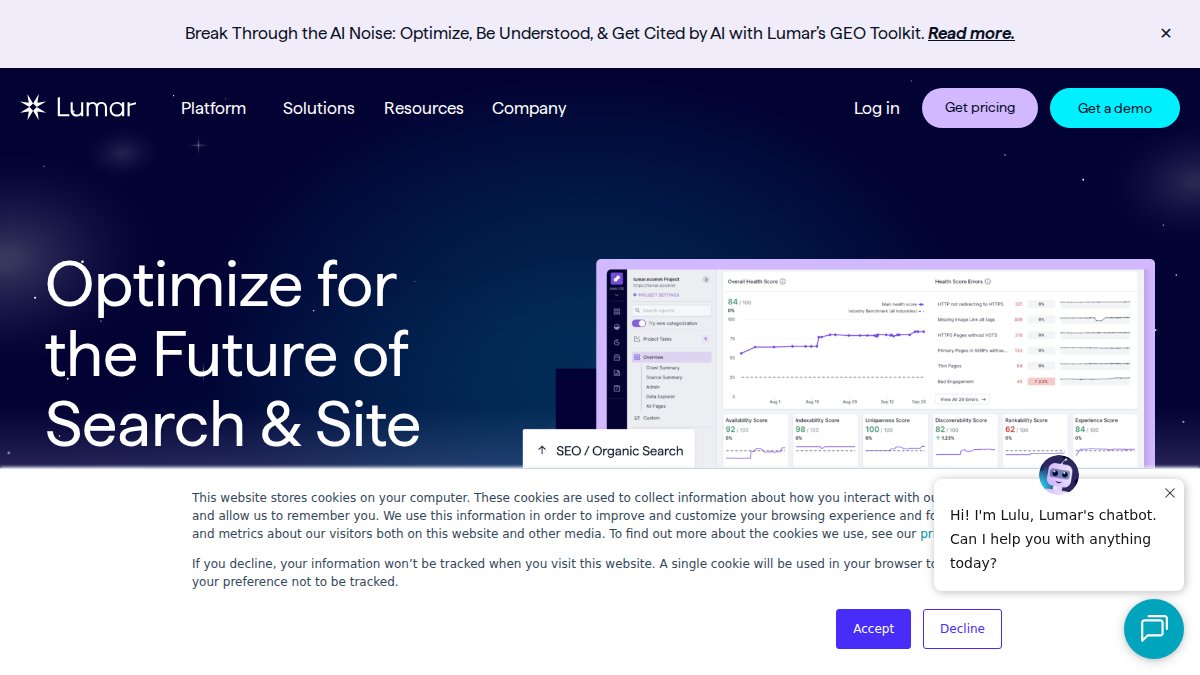
Lumar: Technical Health and Performance Monitoring
Lumar (formerly Screaming Frog) specializes in technical SEO health monitoring. The platform crawls your site at high speed and provides automated alerts when issues emerge. Integration with CI/CD pipelines means you can test SEO changes before they go live, catching issues in development rather than production.
Lumar's weakness is its limited content and keyword research capabilities. It's a technical tool, not a comprehensive SEO platform.
Best for: Large-scale technical teams needing to maintain site health and performance.
Pros:
- Extremely fast and reliable crawling
- Strong focus on technical SEO and site performance
Cons:
- Limited content and keyword research capabilities
Clearscope: AI-Driven Content Optimization
Clearscope uses natural language processing to grade and optimize content for relevance and keyword alignment. Integration with Google Docs and WordPress means writers can optimize content in their native environment rather than copying between tools.
Clearscope is content-focused. It doesn't provide rank tracking, technical auditing, or competitive backlink analysis.
Best for: Enterprise content teams focused on producing high-quality, SEO-optimized content.
Pros:
- Excellent content optimization and grading
- Easy-to-use interface for writers and editors
Cons:
- Focused solely on content; lacks technical SEO and rank tracking

Quick Comparison Table: Enterprise SEO Software
| Platform | Starting Price | Best For | Key Strength |
|---|---|---|---|
| GrandRanker | Free trial available | Founders & lean teams | AI-powered automation |
| BrightEdge | ~$127K/year | Global enterprises | Content intelligence at scale |
| Conductor | Contact for pricing | Content-led teams | Workflow & collaboration |
| seoClarity | ~$3,600/month | Large organizations | Unlimited scaling |
| Botify | $75K-$400K+/year | Massive sites (500K+ URLs) | Technical SEO depth |
| Semrush Enterprise | Contact for pricing | Cross-channel marketing | All-in-one suite |
| Ahrefs Enterprise | Contact for pricing | Competitive research focus | Backlink intelligence |
| Lumar | Contact for pricing | Technical teams | Site health monitoring |
| Clearscope | Contact for pricing | Content teams | Content optimization |
Calculating Enterprise SEO ROI: What to Measure
Before committing to enterprise SEO software, establish what success looks like and how you'll measure it.
Organic Traffic Growth and Keyword Rankings
Track your baseline traffic for three months before implementing new software, then measure month-over-month growth after launch. Most enterprises see measurable traffic increases within 60-90 days if the platform is used effectively.
Focus on keywords where ranking improvements correlate with traffic and conversions. Research from Ahrefs' 2026 ranking study shows that organic traffic increases an average of 15-30% in the first six months when enterprises implement proper SEO workflows.
Revenue Attribution and Cost-Per-Acquisition
The metric that matters most to your CFO is revenue. Set up proper attribution tracking in your analytics system to segment organic traffic by source keyword, landing page, and conversion path.
Calculate the cost per acquisition from organic traffic. If your enterprise SEO software costs $50K annually and generates $500K in attributed revenue, your ROI is 10:1. This justifies the investment.
AI Search Visibility Tools and Answer Engine Optimization
Answer engines like ChatGPT, Claude, and Perplexity are now primary discovery channels. Enterprise SEO software must help you rank not just in Google, but in AI assistants.
Answer engine optimization (AEO) requires different strategies than traditional SEO. AI systems favor comprehensive, authoritative content that directly answers questions and cite sources. The best enterprise SEO platforms now include AEO features that track visibility across answer engines alongside Google rankings.
Implementation Roadmap: Avoiding Common Pitfalls
Buying enterprise SEO software is easy. Using it effectively is hard. Most implementations fail because organizations underestimate the change management required.
Security and Data Privacy in Automation
Enterprise SEO software handles sensitive data: your site structure, keyword strategy, content roadmaps, and sometimes customer data. Before implementation, establish security requirements with your IT and legal teams.
Verify that the platform offers role-based access controls and encryption standards. Automated workflows mean the platform will make changes to your systems. Establish approval workflows so critical changes require human sign-off.
Negative SEO Risks and Mitigation Strategies
As your enterprise SEO platform becomes more powerful, the potential for mistakes increases. Key risks include:
Keyword cannibalization: If automation creates multiple pages targeting the same keyword, you're competing with yourself. Set rules that prevent this.
Over-optimization: Automated content optimization can produce keyword-stuffed content that reads poorly. Always include human editorial review before publishing.
Technical mistakes: Automated technical changes can have site-wide impact. Implement staging environments where changes can be tested before going live.
Mitigate these risks by implementing proper governance: approval workflows, human review for critical changes, and thorough testing in staging environments.
How to Choose the Right Enterprise SEO Software
The best platform depends on your specific situation.
Evaluating Team Size and Skill Level
A platform designed for a 50-person team will overwhelm a 5-person team. Consider your team's technical depth. If your team includes developers and data engineers, you can use APIs and custom integrations. If your team is primarily marketers, you need a platform with a strong UI and minimal technical requirements.
Also consider your team's SEO maturity. A team new to enterprise SEO benefits from guided workflows and templates. A mature team wants flexibility and advanced features.
Budget vs. Feature Depth Trade-offs
Enterprise SEO software pricing ranges from free (GrandRanker's free plan) to $400K+ annually (Botify for massive sites). More expensive doesn't mean better; it means more specialized.
Evaluate what features you actually need. If you're content-driven, Conductor's workflow features matter more than Botify's crawl analysis. If you're technical, Botify's depth justifies the cost.
Start with a free trial or proof-of-concept. Implement the platform with a subset of your team, measure results, then decide whether to expand.
Choosing enterprise SEO software in 2026 means evaluating not just traditional ranking metrics, but answer engine visibility, workflow automation, and revenue attribution. The platforms that matter are the ones that eliminate manual work and surface the insights your team actually needs to act on. GrandRanker's AI-powered automation approach is particularly strong for organizations wanting to scale SEO without scaling headcount. Get started with GrandRanker and automate keyword research, content creation, and optimization so your team focuses on strategy instead of busywork.
Frequently Asked Questions
What is enterprise SEO software and how does it differ from standard tools?
Enterprise SEO software is built for organizations managing large-scale websites, complex content operations, and distributed teams. Unlike standard tools, enterprise platforms offer unlimited crawling, advanced workflow automation, API integration for custom workflows, multi-user collaboration, and revenue-tied reporting. They handle sites with 500K+ URLs, aggregate data across multiple pillars (technical, content, competitive), and provide executive dashboards that correlate SEO performance to business outcomes. Most require annual contracts and custom pricing.
How do I calculate ROI for enterprise SEO software investments?
Track three key metrics: organic traffic growth (month-over-month increase), keyword ranking improvements (positions gained in top 10 and top 20), and revenue attribution (leads or sales sourced from organic search). Divide annual revenue impact by total software cost plus implementation hours. Most enterprises see 6-12 month payback periods. Measure before-and-after organic traffic velocity, and tie SEO wins to actual conversions using UTM parameters or CRM integration. Document competitive share gains in your target keywords to justify ongoing investment.
What features should I prioritize when selecting enterprise SEO software?
Prioritize workflow automation to reduce manual tasks, API and CMS integration for seamless data pipelines, unlimited site crawling for technical audits, rank tracking across traditional and AI search engines, collaborative dashboards for distributed teams, and revenue-attribution reporting. Evaluate whether the platform handles your specific tech stack (WordPress, Shopify, custom CMS). For teams using AI-powered content, ensure the tool tracks answer engine optimization and AI assistant visibility. Test onboarding complexity and data migration from legacy systems before committing.
Which enterprise SEO platform is best for technical SEO at scale?
Botify excels at technical SEO for massive sites (500K+ URLs), offering log file analysis, crawl budget optimization, and indexation monitoring. For mid-market enterprises, seoClarity provides unlimited crawling and technical diagnostics without the premium price. Lumar offers fast, reliable crawling with CI/CD integration for development teams. BrightEdge combines technical auditing with content intelligence. Your choice depends on site size: Botify for 1M+ URLs, seoClarity for 100K-1M URLs, Lumar for performance-focused teams, and BrightEdge for balanced technical and content needs.
This article was written using GrandRanker