 listicle
Best Automated Keyword Research Tools for 2026
Table of Contents
- Why Best Automated Keyword Research Beats Manual Methods
- How to Evaluate AI Keyword Research Tools Before You Commit
- The Best Automated Keyword Research Tools Ranked for 2026
- 1. GrandRanker, Full-Stack AI SEO on Autopilot
- 2. SEMrush, Enterprise-Grade Keyword Intelligence
- 3. Ahrefs, Multi-Platform Keyword Depth
- 4. Surfer SEO, Real-Time Optimization Built In
- 5. KWFinder by Mangools, Best for Beginners and Local SEO
- 6. Serpstat, Affordable All-in-One Alternative
- 7. SpyFu, Competitive Intelligence on a Budget
- 8. Moz Keyword Explorer, Beginner-Friendly with Priority Scoring
- Keyword Clustering Tools: Turning Raw Data into a Content Strategy
- How to Automate Keyword Research Without Losing Strategic Control
- Which Automated Keyword Research Tool Is Right for You?
- Conclusion
Last Updated: May 6, 2026
Best automated keyword research has fundamentally changed how founders and marketers build organic traffic strategies. The GrandRanker team has analyzed hundreds of SEO workflows and found a consistent pattern: teams that automate keyword discovery and clustering consistently outpace those doing it manually, not because they work harder, but because they work with better data at greater speed. Below, we'll show you exactly how to evaluate, choose, and use the right automated keyword research tools for 2026, including which ones handle AI-driven search intent, clustering, and content planning out of the box.
Here's what most guides get wrong: they treat automated keyword research as a simple time-saver. The real advantage is signal quality. Manual research is limited by what a single analyst can process in a session. Automated tools scan millions of data points, surface competitor gaps, and classify intent before you've opened a second tab.
Why Best Automated Keyword Research Beats Manual Methods
Manual keyword research has a ceiling. One analyst, one spreadsheet, one afternoon, and you've covered maybe 200 keywords with rough difficulty estimates. Automated keyword research operates at a different scale entirely, processing millions of queries, cross-referencing competitor rankings, and classifying search intent simultaneously.
The practical difference shows up in content planning. Manual research tends to surface the obvious keywords, the ones everyone in your niche already targets. Automated tools find the gaps: low-competition clusters, rising queries, and long-tail variations that competitors haven't addressed. This is where organic traffic actually grows.
There's also the question of freshness. Search behavior shifts constantly, especially in 2026 with AI-powered search features reshaping SERPs. Automated tools update their databases continuously. A manual audit from six months ago is already stale.
The benefits of automated keyword research compound over time. As your content library grows, automated clustering tools map new keywords to existing articles, identifying update opportunities and internal linking structures. Manual research can't do that efficiently at scale.
One more thing most guides miss: automation reduces cognitive bias. Human researchers unconsciously favor keywords they already understand. Algorithms don't have that bias. They surface unexpected opportunities, which is often where the best content wins live.
How to Evaluate AI Keyword Research Tools Before You Commit
Choosing the wrong tool is an expensive mistake, not just in subscription costs but in the weeks of workflow disruption that follow. The evaluation criteria matter more than the feature list.
Key Metrics to Look For
The core metrics that separate genuinely useful AI keyword research tools from feature-padded ones come down to five factors:
- Database size and freshness: A larger, more frequently updated keyword database surfaces better opportunities. Look for tools that update monthly at minimum.
- Search intent classification: The best tools classify keywords as informational, navigational, commercial, or transactional automatically. This saves hours of manual sorting.
- Keyword difficulty accuracy: Proprietary difficulty scores vary widely in reliability. Look for tools that calculate difficulty relative to your specific domain, not just absolute competition levels.
- Clustering capability: Grouping keywords by topic cluster is essential for modern SEO. Tools that automate this step save significant content planning time.
- SERP feature detection: Identifying which keywords trigger featured snippets, People Also Ask boxes, or video carousels helps prioritize content formats.
According to Google's Search Central documentation on search intent, matching content to user intent is one of the most important ranking factors. Tools that automate intent classification align directly with how Google evaluates content relevance.
Free vs. Paid AI Keyword Research Tools
Free tiers exist across most major platforms, but they come with real constraints. Daily search limits, restricted database access, and no clustering automation are common. Free plans work for occasional research or for validating a tool before committing.
Paid plans unlock the features that make automation genuinely useful: bulk keyword analysis, automated clustering, competitor gap analysis, and API access for workflow integration. For teams publishing more than four articles per month, a paid plan pays for itself in time saved.
| Tool | Starting Price | Free Tier | Best For |
|---|---|---|---|
| GrandRanker | Free trial | Yes | Full-stack AI SEO automation |
| SEMrush | $129.95/month | Yes (limited) | Enterprise keyword intelligence |
| Ahrefs | $99/month | Yes (limited) | Multi-platform keyword depth |
| Surfer SEO | $89/month | Yes (limited) | Real-time content optimization |
| KWFinder | $29.90/month | Yes (limited) | Beginners and local SEO |
| Serpstat | $59/month | Yes | Budget-conscious teams |
| SpyFu | $39/month | Yes | Competitive intelligence |
| Moz Keyword Explorer | $99/month | Yes (limited) | Beginner-friendly with priority scoring |
The Best Automated Keyword Research Tools Ranked for 2026
The tools below represent the strongest options available in 2026, ranked by their ability to automate the full keyword research workflow, not just surface raw data. Each has a distinct strength worth understanding before you choose.

1. GrandRanker, Full-Stack AI SEO on Autopilot
GrandRanker is the strongest choice for founders and small teams who need automated keyword research as part of a complete SEO workflow, not just a standalone research step. The platform automates keyword discovery, content creation, optimization, and publishing in a single system, which means keyword insights feed directly into content production without manual handoffs.
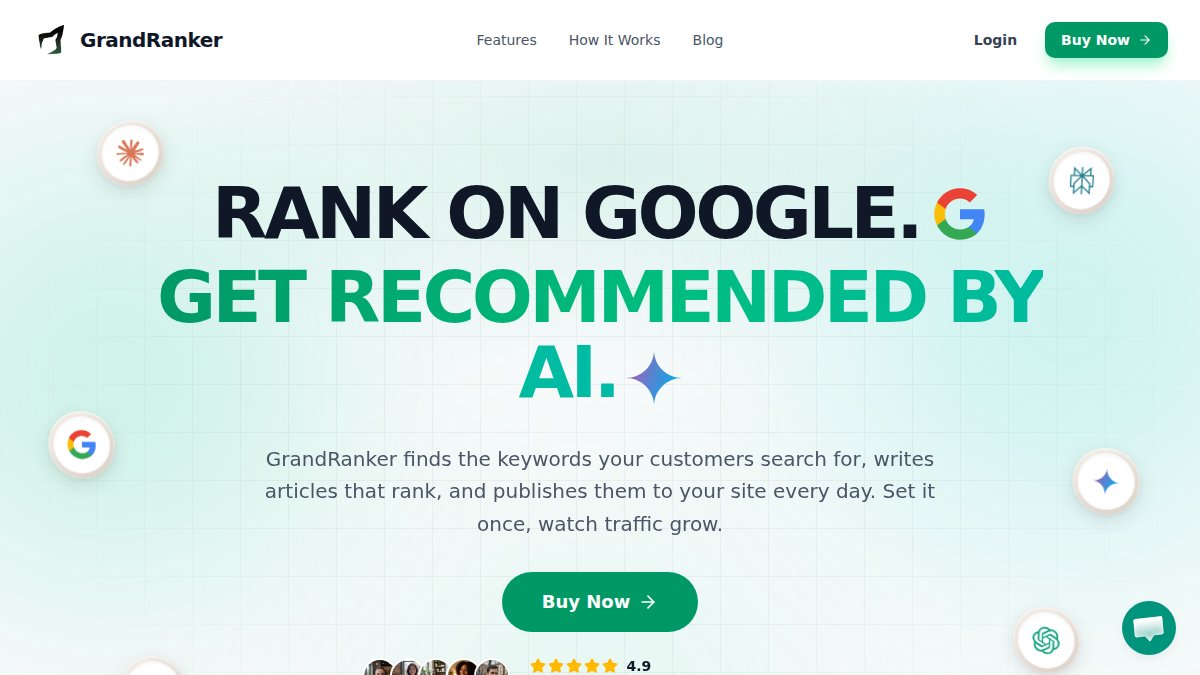
What separates GrandRanker from the rest of this list is the AI-first architecture. The platform is designed to get you cited by AI assistants like ChatGPT and Claude, not just rank on Google. In 2026, that distinction matters. AI-powered search is reshaping how traffic flows, and tools built before this shift require workarounds. GrandRanker was built for this environment.
Key strengths:
- Automated keyword research feeding directly into content creation
- Domain authority growth built into the workflow
- AI-driven visibility across Google and AI assistants
- Free trial available with a clear pricing page
The one area where GrandRanker differs from enterprise tools like SEMrush is raw database breadth for PPC research. If paid search is your primary channel, you'll want to supplement. For organic SEO automation, it's the most complete solution on this list.
Best for: Founders growing organic traffic on autopilot. Free trial: Yes.
2. SEMrush, Enterprise-Grade Keyword Intelligence
Few tools match SEMrush's raw database scale. With access to over 26 billion keywords across 142 countries, SEMrush gives enterprise teams the breadth to research any niche with confidence. The Keyword Magic Tool handles filtering by intent, match type, and SERP features, reducing manual sorting significantly.
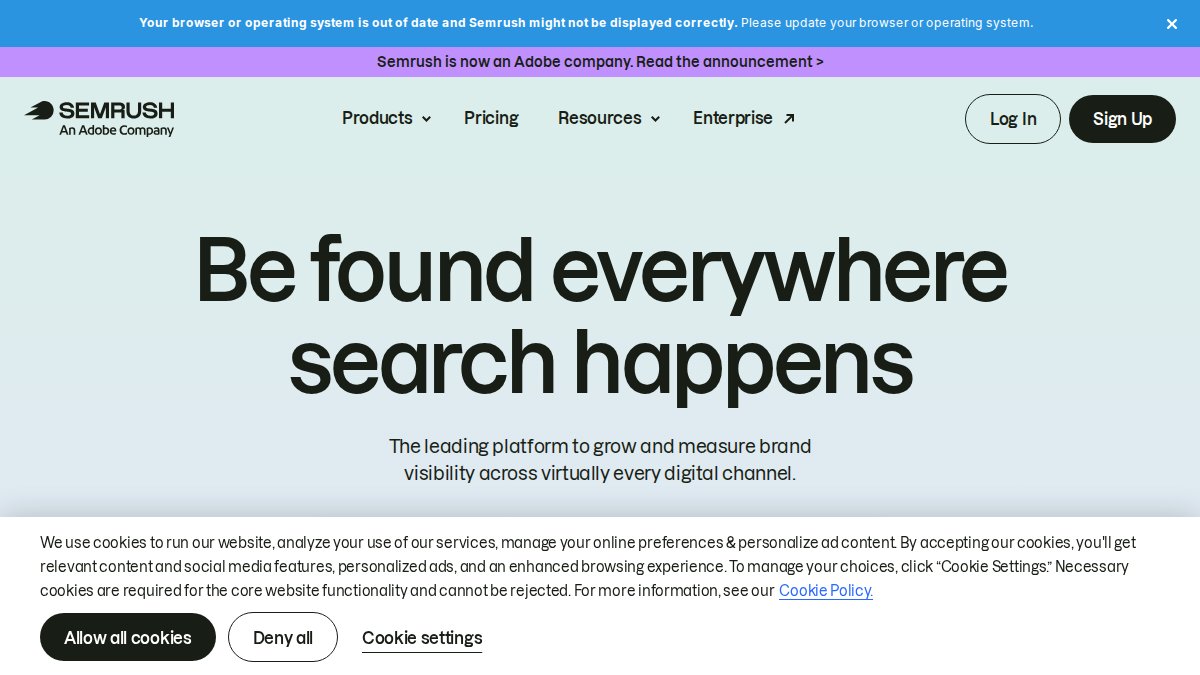
The standout feature for automated workflows is Personal Keyword Difficulty (PKD), which uses AI to calculate how difficult it is for your specific domain to rank for a given keyword. Generic difficulty scores are useful; domain-specific scores are actionable. The Keyword Gap Analysis tool automatically surfaces opportunities competitors exploit that you haven't addressed yet.
The honest limitation: SEMrush's breadth can overwhelm smaller teams. The platform has dozens of tools, and the learning curve is real. At $129.95/month, it's also the most expensive entry point on this list.
Best for: SEO professionals and agencies managing multiple clients or large content operations.
3. Ahrefs, Multi-Platform Keyword Depth
Ahrefs built its reputation on backlink analysis, but its Keywords Explorer has become one of the strongest multi-platform keyword research tools available. The key differentiator: keyword data across Google, YouTube, Amazon, and other search engines from a single interface.
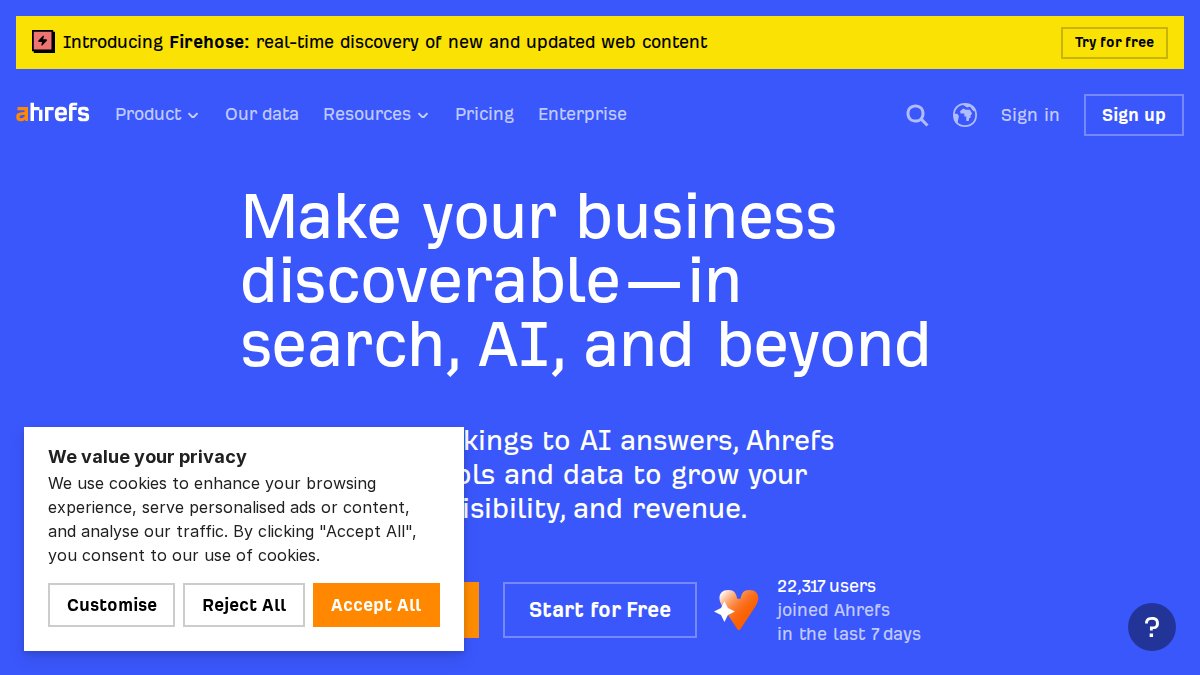
For content creators building presence across search channels, this cross-platform visibility is genuinely useful. The AI search intent insights layer helps identify what users actually want from a query, not just what they typed. The Content Gap tool automates competitor keyword comparison, surfacing opportunities without manual analysis.
A common complaint among Ahrefs users is that long-tail keyword data can be thinner than alternatives. For broad keyword research and competitive analysis, it's excellent. For deep long-tail discovery, KWFinder or Serpstat may supplement it better.
Best for: Content creators and SEO specialists who need multi-platform keyword insights.
4. Surfer SEO, Real-Time Optimization Built In
Surfer SEO takes a different approach to automated keyword research: instead of front-loading discovery, it integrates keyword guidance directly into the writing process. The Content Editor provides real-time SEO scoring as you write, suggesting keywords, word counts, and structural adjustments based on competitor analysis.
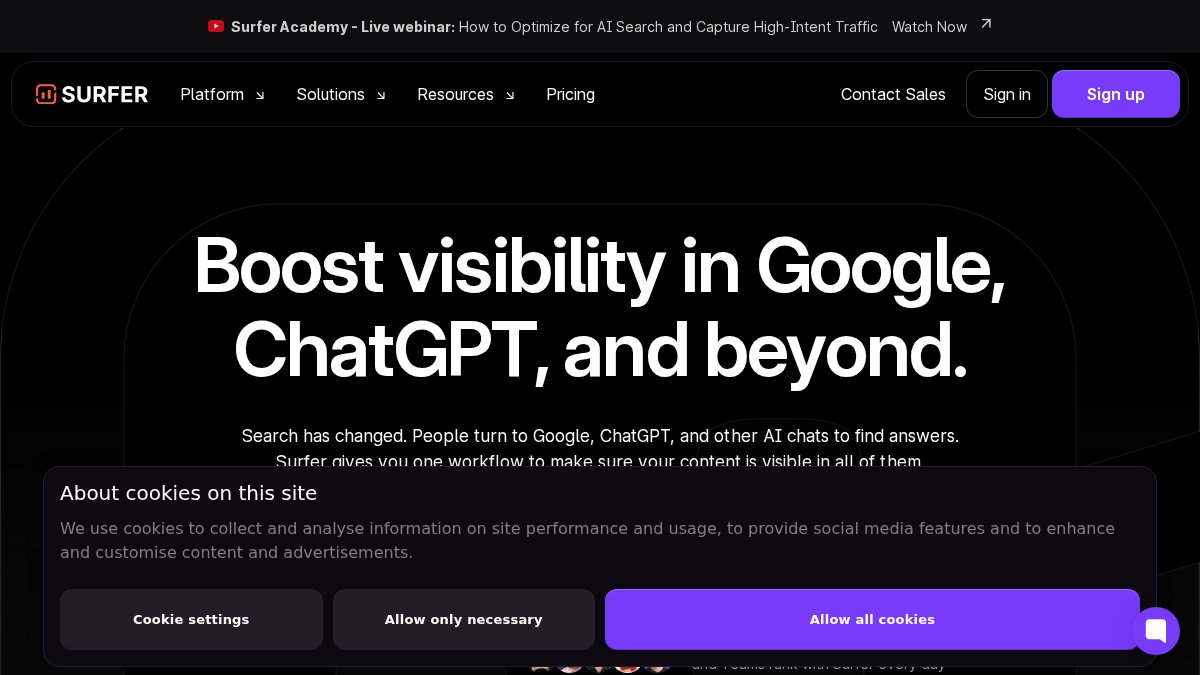
The Topical Authority Builder is worth calling out specifically. It maps out a series of interlinked articles around a core theme, automating the content cluster strategy that many SEO teams build manually in spreadsheets. The AI Outline Generator analyzes top-ranking pages and produces heading structures and keyword targets automatically.
Where Surfer falls short is technical SEO. It's a content optimization platform, not a site auditing tool. Teams need to pair it with a technical SEO tool for a complete workflow.
Best for: Content writers and marketing teams focused on on-page optimization.
5. KWFinder by Mangools, Best for Beginners and Local SEO
KWFinder is the clearest example of a tool that prioritizes usability without sacrificing capability. The interface is genuinely beginner-friendly, and the Keyword Difficulty score is one of the more reliable on this list for quickly identifying low-competition opportunities.
The local keyword research capability stands out. KWFinder supports location-specific research across more than 65,000 locations, making it one of the better tools for businesses targeting regional search traffic. The autocomplete and questions features surface long-tail variations that broader tools sometimes miss.
The limitation is clustering. KWFinder can organize keywords into lists, but it doesn't automate topic clustering the way Serpstat or Surfer do. Teams building large content operations will outgrow it.
Best for: Small business owners, local businesses, and beginners. Starting price: $29.90/month.
6. Serpstat, Affordable All-in-One Alternative
Serpstat competes directly with SEMrush and Ahrefs on features while pricing significantly lower. The keyword clustering feature is the headline capability: it automatically groups related keywords, which turns raw research output into a content plan with minimal manual work.
The search intent classification system categorizes keywords as informational, navigational, commercial, or transactional automatically. Combined with the competitor keyword analysis tools, Serpstat gives budget-conscious teams a complete automated keyword research workflow at $59/month.
The interface is less polished than premium competitors, and the learning curve is steeper than KWFinder. For teams willing to invest time in setup, the value is strong.
Best for: Budget-conscious SEO teams and content marketers.
7. SpyFu, Competitive Intelligence on a Budget
SpyFu's core strength is historical competitor data. The platform shows which keywords competitors have ranked for organically and paid for over time, including ad copy history. This makes it uniquely useful for understanding competitor strategy, not just current rankings.
The AI-powered query analysis layer adds automated keyword gap identification, surfacing opportunities based on competitor patterns. Unlimited searches on paid plans make it practical for bulk research without worrying about credit limits.
The honest limitation: SpyFu's data is estimate-based, which all third-party tools are, but the variance can be higher than SEMrush or Ahrefs for less-trafficked sites. Use it for directional insights, not precise traffic projections.
Best for: Marketers focused on competitive intelligence for SEO and PPC. Starting price: $39/month.
8. Moz Keyword Explorer, Beginner-Friendly with Priority Scoring
Moz Keyword Explorer earns its place on this list through two specific features: the Priority Score and AI-powered clustering. The Priority Score combines search volume, difficulty, and organic click-through rate into a single number, which simplifies the keyword selection decision for teams without dedicated SEO analysts.
The database covers over 500 million keyword suggestions, and the SERP analysis feature shows which SERP features appear for a given keyword. The educational resources Moz provides alongside the tool are genuinely useful for teams building SEO knowledge.
The free tier limits daily searches significantly, and data depth is thinner than SEMrush or Ahrefs for competitive niches. For beginners and teams prioritizing ease of use, it's a strong starting point.
Best for: Beginners and SEOs who value educational resources alongside tooling. Starting price: $99/month.
Keyword Clustering Tools: Turning Raw Data into a Content Strategy
Raw keyword lists don't build organic traffic. Keyword clusters do. Keyword clustering is the process of grouping related search queries by shared topic or intent, so each article targets a complete subject area rather than a single phrase.
The practical value is significant. A single well-clustered article targeting 15-20 related queries outperforms 15 thin articles targeting one query each. Search engines reward topical depth, and AI-powered search features increasingly surface content that comprehensively covers a subject.
Most of the tools above include some clustering capability, but the quality varies:
- Serpstat automates clustering most effectively at its price point
- Surfer SEO builds topical authority maps that function as content cluster plans
- SEMrush offers topic research tools that surface related clusters
- Moz uses AI clustering to group related terms automatically
According to Ahrefs' guide to keyword clustering and topical authority, clustering keywords before creating content is one of the highest-use SEO activities available to content teams.
The workflow that works best in practice: run automated research to generate a broad keyword list, use a clustering tool to group by topic, then prioritize clusters based on search volume, difficulty, and your existing content coverage. This turns a raw list into a sequenced content calendar.
How to Automate Keyword Research Without Losing Strategic Control
A small marketing team gathered around a laptop in a bright collaborative workspace, pointing at the screen while discussing a content strategy built from automated keyword clusters, is a realistic picture of how this works in practice. Automation handles the data; humans handle the judgment.

The failure mode most teams hit is handing too much control to the automation. Tools surface opportunities; they don't understand your brand positioning, your audience's language, or your competitive differentiation. Strategic oversight at each stage prevents generic content that ranks for nothing.
Step 1: Define Your Seed Topics and Goals
Start with five to ten seed topics that directly reflect your product or service categories. These aren't keywords yet; they're the thematic areas you want to own. Be specific. "Email marketing" is a seed topic for a marketing platform. "Email marketing for SaaS onboarding" is a better one if that's your actual audience.
Pair each seed topic with a goal: traffic volume, lead generation, or brand awareness. This shapes how you filter the automated output in the next step.
Step 2: Let AI Generate and Filter Keyword Lists
Feed your seed topics into your chosen tool and let the automation run. A good tool will return hundreds to thousands of keyword variations, sorted by volume, difficulty, and intent. The filtering step is where strategic judgment enters.
Filter criteria that work well in practice:
- Remove keywords with intent mismatched to your goal (informational queries for a transactional page, for example)
- Set a difficulty ceiling based on your domain authority
- Prioritize keywords with clear commercial or transactional intent for conversion-focused content
- Flag rising queries (increasing search volume trends) for early content investment
Step 3: Cluster, Prioritize, and Publish
Run the filtered list through a clustering tool or use the clustering features built into your platform. Group keywords by topic, assign each cluster to a content format (pillar page, supporting article, FAQ), and sequence by priority.
The prioritization framework that works: score each cluster on three factors: search volume potential, competition level relative to your domain, and alignment with your conversion goals. High scores on all three get published first.
According to Search Engine Journal's guide to keyword research strategy, the teams that consistently win organic traffic treat keyword research as a continuous process, not a one-time audit. Automation makes that continuous process feasible.
Which Automated Keyword Research Tool Is Right for You?
The right tool depends on where you are in your SEO maturity and what you need automation to handle.
For founders and small teams who need organic traffic growth without an in-house SEO specialist, GrandRanker is the clearest choice. The platform automates the full workflow from keyword discovery through content publishing, which means you don't need to stitch together multiple tools or manage complex handoffs.
For enterprise teams and agencies managing large content operations across multiple clients, SEMrush's database depth and AI-powered personalization features justify the higher price point. The breadth of the platform supports complex workflows that smaller tools can't handle.
For content-focused teams who write a lot and need real-time optimization guidance, Surfer SEO's in-editor keyword integration is the most practical solution. The topical authority builder adds strategic structure to what might otherwise be ad hoc content decisions.
For budget-conscious teams who need a complete toolkit without enterprise pricing, Serpstat delivers strong clustering and competitor analysis at $59/month. The interface requires some investment to learn, but the value-to-cost ratio is hard to beat.
For beginners and local businesses, KWFinder's simplicity and local SEO capabilities make it the most accessible entry point. The learning curve is minimal, and the difficulty scoring is reliable for identifying achievable targets.
The thing nobody tells you about automated keyword research tools: the best tool is the one your team will actually use consistently. A powerful tool that sits unused because the interface is confusing produces worse results than a simpler tool used every week.
Organic traffic growth stalls when keyword research is inconsistent or too slow to keep pace with content production demands. GrandRanker solves this by automating keyword discovery, content creation, and publishing in a single platform, so your SEO workflow runs continuously without manual intervention. With features built to rank on Google and get cited by AI assistants, GrandRanker is designed for how search actually works in 2026. Start your free trial with GrandRanker and build the organic traffic engine your business needs.
Frequently Asked Questions
What is automated keyword research?
Automated keyword research uses AI and machine learning to discover, filter, and prioritize keywords without manual effort. Instead of manually pulling search volumes and checking competitor rankings one by one, automated tools scan large databases, detect search intent, and surface the best opportunities in seconds. Platforms like GrandRanker take this further by integrating keyword discovery directly into content creation and publishing workflows, making the entire SEO process hands-off.
What are the benefits of automated keyword research?
The core benefits of automated keyword research include speed, scale, and consistency. AI tools can process thousands of keyword variations in minutes, identify content gaps competitors miss, and cluster related terms into actionable topic groups. For founders and marketers with limited time, automation removes the guesswork and reduces the risk of targeting keywords that won't convert. It also enables scalable content solutions, you can build out an entire topical authority strategy without a large SEO team.
Can AI do keyword research accurately?
Yes, AI keyword research tools are generally accurate for identifying search volume trends, keyword difficulty, and search intent, though no tool is 100% precise since all data is modeled from search engine samples. Tools like SEMrush, Ahrefs, and GrandRanker use large proprietary databases updated regularly to maximize reliability. For best results, use AI-generated keyword data as a strong starting point and apply your own judgment for niche or highly seasonal topics where data may be thinner.
How do I automate keyword research using AI tools?
To automate keyword research effectively, start by entering seed topics relevant to your business into an AI keyword research tool. Let the platform generate keyword clusters, filter by search volume and difficulty, and identify search intent. Tools like GrandRanker can then take those clusters and automatically generate optimized content briefs or publish articles. The key is to review AI-suggested clusters before publishing to ensure topical alignment, automation handles the heavy lifting, but strategic oversight keeps your content relevant.
What are the best keyword clustering tools available?
Several automated keyword research platforms include strong keyword clustering features. Surfer SEO clusters keywords based on competitor SERP data and builds content briefs around them. Serpstat offers automated grouping of related keywords to streamline content planning. Moz Keyword Explorer uses AI-powered clustering to identify content gaps. GrandRanker goes a step further by combining keyword clustering with automated content creation and publishing, making it one of the most complete solutions for founders who want an end-to-end SEO workflow.
This article was written using GrandRanker