 listicle
7 Best SEO Tools for Mid-Sized Business in 2026
Table of Contents
- Why Mid-Sized Businesses Need Specialized SEO Tools
- 7 Best SEO Tools for Mid-Sized Business: Quick Comparison
- 1. GrandRanker: AI-Powered SEO on Autopilot
- 2. SEMrush: All-in-One Platform for Keyword Research and Competitor Analysis
- 3. Ahrefs: Best for Backlink Analysis and Site Audits
- 4. Moz Pro: User-Friendly Rank Tracking and Link Explorer
- 5. SpyFu: Budget-Friendly Competitor Intelligence Tool
- 6. Clearscope: AI-Powered Content Optimization for Mid-Sized Teams
- 7. Screaming Frog SEO Spider: Technical SEO Audits at Scale
- How We Evaluated These SEO Tools for Mid-Sized Businesses
7 Best SEO Tools for Mid-Sized Business in 2026
Last Updated: July 28, 2026
Mid-sized businesses face a unique challenge: they've outgrown the simplicity of free SEO tools, but enterprise-level platforms often feel bloated and expensive. Finding the right SEO tools for mid-sized business requires balancing comprehensive features with usability and cost. At GrandRanker, we understand this tension deeply. Our analysis of market leaders reveals that the 7 best seo tools for mid-sized business fall into distinct categories based on what your team actually needs to rank higher on Google, grow organic traffic, and compete effectively.
The stakes are high. Mid-sized businesses typically compete against both smaller, nimble competitors and large enterprises with dedicated SEO teams. Without the right tools, you're essentially working blind, guessing at keywords, missing technical issues, and losing visibility to companies that invest in proper SEO infrastructure. Research from Search Engine Journal's 2026 SEO trends report shows that businesses using dedicated SEO tools see 40% faster organic growth than those relying on manual analysis alone.
Below, we'll walk you through the 7 best seo tools for mid-sized business, comparing features, pricing, and real-world fit. We'll also show you how to evaluate these tools against your specific needs, because the "best" tool depends entirely on your team size, budget, and strategic priorities.
Why Mid-Sized Businesses Need Specialized SEO Tools
Mid-sized businesses occupy a specific niche in the market that demands different capabilities than small startups or enterprises. Your team likely has 3-10 people focused on marketing, limited budget for multiple tools, and the need to prove ROI to leadership. Generic tools built for freelancers won't scale to your needs, but enterprise platforms designed for Fortune 500 companies will waste money on features you'll never use.
The reality is straightforward: manual SEO work doesn't scale. A single person can manually track 20 keywords. A mid-sized business tracking 500+ keywords needs automation. Similarly, technical SEO audits on a 10,000-page website require crawling tools that can handle scale without choking. According to HubSpot's 2026 marketing platform benchmark, teams using dedicated SEO tools report 35% better keyword ranking visibility and 28% faster content optimization cycles compared to teams using spreadsheets or generic analytics platforms.
Mid-sized businesses also need tools that integrate with existing marketing stacks, CRM systems, email platforms, analytics tools, and content management systems. Isolated tools create data silos. The best SEO tools for mid-sized business are those that connect to your broader marketing ecosystem, allowing data to flow between systems without manual exports and imports.
7 Best SEO Tools for Mid-Sized Business: Quick Comparison
| Tool | Starting Price | Best For | Standout Feature |
|---|---|---|---|
| GrandRanker | Free trial available | AI-powered automation | Content on autopilot |
| SEMrush | $129.95/month | Comprehensive SEO suite | Competitor analysis depth |
| Ahrefs | $99/month | Backlink analysis | Near real-time data |
| Moz Pro | $99/month | User-friendly interface | Link explorer accuracy |
| SpyFu | $39/month | Budget-conscious teams | PPC + organic analysis |
| Clearscope | $129/month | Content teams | AI content optimization |
| Screaming Frog | $279/year | Technical SEO | Unlimited crawls |
1. GrandRanker: AI-Powered SEO on Autopilot
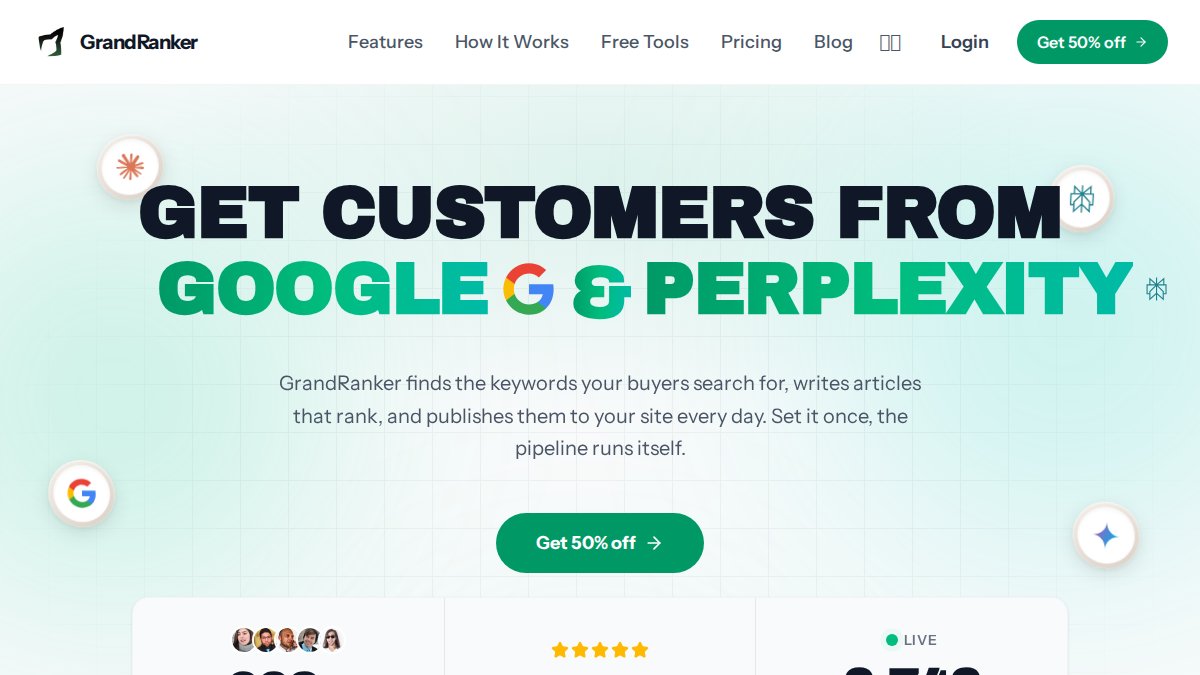
GrandRanker stands apart because it automates the entire SEO workflow, something no other tool on this list does comprehensively. Instead of manually researching keywords, creating content, optimizing pages, and tracking rankings, GrandRanker handles these tasks automatically using AI. For mid-sized teams stretched thin, this automation translates directly to capacity.

The platform identifies high-opportunity keywords your competitors are missing, generates SEO-optimized content, and publishes it automatically. More importantly, GrandRanker ensures your content gets cited by AI assistants like ChatGPT and Claude, a critical advantage in 2026 where AI-driven traffic is becoming a major source of qualified leads. Your content ranks on Google while also appearing as authoritative answers in AI search results.
What makes GrandRanker specifically suited for mid-sized businesses is the collaborative workflow. You're not locked into a single-person operation. Multiple team members can oversee campaigns, adjust strategy, and monitor performance without needing deep technical SEO knowledge. The platform provides transparent reporting that shows exactly how much organic traffic you're gaining and from which keywords.
The trade-off is that GrandRanker is less granular than specialized tools for specific tasks. If you need to analyze a competitor's exact backlink profile or crawl a 500,000-page website, you'll want to supplement with other tools. But for the core mission, growing organic traffic consistently, GrandRanker removes friction.
2. SEMrush: All-in-One Platform for Keyword Research and Competitor Analysis
SEMrush remains the most comprehensive platform for mid-sized teams that need depth across multiple SEO disciplines. The tool covers keyword research, competitor analysis, site audits, content marketing, and backlink tracking in a single interface. For teams that want one dashboard instead of five separate tools, SEMrush delivers.
The competitor analysis features are genuinely powerful. You can see exactly which keywords your competitors rank for, their estimated monthly traffic from organic search, their top-performing pages, and their backlink strategies. This intelligence feeds directly into your strategic planning. If a competitor is ranking for 200 keywords you're not, SEMrush shows you which ones are most valuable to pursue.
The site audit tool crawls your entire website and identifies technical SEO issues: broken links, duplicate content, missing meta tags, crawl errors, and page speed problems. For a mid-sized website with thousands of pages, this automation is essential. You can't manually check every page. SEMrush prioritizes issues by impact, telling you which fixes will move the needle most.
Content marketing tools within SEMrush help with optimization. You input a target keyword and the tool analyzes top-ranking content to show you what structure, word count, and topics successful pages include. It's not as automated as GrandRanker, but it's significantly faster than manual research.
The downside: SEMrush has a steep learning curve. The platform is feature-rich to the point of overwhelming new users. You'll spend the first 2-3 weeks learning where things are. Additionally, some advanced features and higher search volume limits require expensive tier upgrades. For teams with limited SEO expertise, this complexity can be a liability.
3. Ahrefs: Best for Backlink Analysis and Site Audits
Ahrefs is the gold standard for backlink analysis. If your SEO strategy depends on understanding link profiles, yours, your competitors', and link building opportunities, Ahrefs delivers unmatched depth. The tool crawls the web continuously and maintains one of the largest backlink databases available.
The Site Explorer feature shows your organic search traffic, which keywords you rank for, and your backlink profile with granular detail. You see not just that you have 500 backlinks, but exactly which sites link to you, the anchor text they use, the authority of those linking domains, and whether those links are healthy or potentially toxic. This intelligence is crucial for managing your link profile and identifying low-quality links that might hurt rankings.
For competitor research, Ahrefs reveals their backlink strategy. You can see which sites link to competitors but not to you, these become your link building targets. The tool also shows content gaps: topics competitors rank for that you don't, prioritized by search volume and keyword difficulty.
The crawl tool performs technical audits similar to SEMrush but with slightly different emphasis. Ahrefs focuses on crawlability and indexation issues, making it particularly strong for larger websites where crawl budget is a real constraint.
Where Ahrefs falls short: it's expensive, and the free tier is quite limited. There's no free trial for paid plans, you either commit or use the limited free version. The learning curve is moderate; it's more intuitive than SEMrush but still requires time investment. For teams that only need backlink analysis, you might be overpaying for features you don't use.
4. Moz Pro: User-Friendly Rank Tracking and Link Explorer
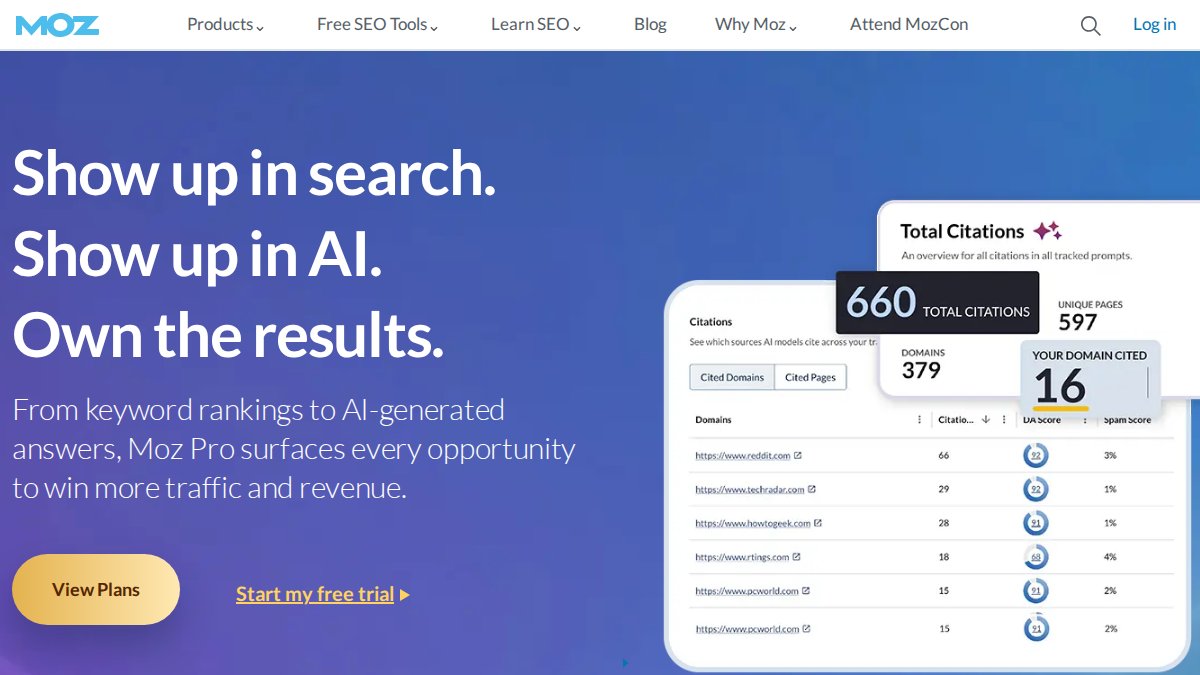
Moz Pro prioritizes usability over feature count, making it an excellent choice for mid-sized teams with limited SEO experience. The interface is cleaner and more intuitive than SEMrush or Ahrefs. You can get productive within hours rather than weeks.
Rank tracking is Moz Pro's strength. You set up keywords you want to track, and Moz monitors your rankings daily. You see not just your position for each keyword but also SERP features (featured snippets, knowledge panels, ads), search volume, and difficulty scores. The reporting is clean and executive-friendly, you can show leadership exactly how rankings are improving without needing to explain methodology.
Link Explorer provides backlink analysis similar to Ahrefs but with less depth. For mid-sized teams that need to understand their link profile without diving into granular detail, this is sufficient. You see your Domain Authority score, backlink count, and top linking domains. The tool also identifies spammy links worth disavowing.
On-page optimization recommendations help with content creation. Input a target keyword and Moz suggests what elements successful pages include. It's less sophisticated than SEMrush's content analysis but still useful.
The limitation: keyword tools can be less accurate than competitors. Moz's search volume and difficulty estimates sometimes diverge from Google's actual data. For teams making major strategic decisions based on keyword metrics, this inaccuracy is problematic. Additionally, daily rank tracking requires higher-tier plans, and some features are locked behind separate subscriptions.
5. SpyFu: Budget-Friendly Competitor Intelligence Tool
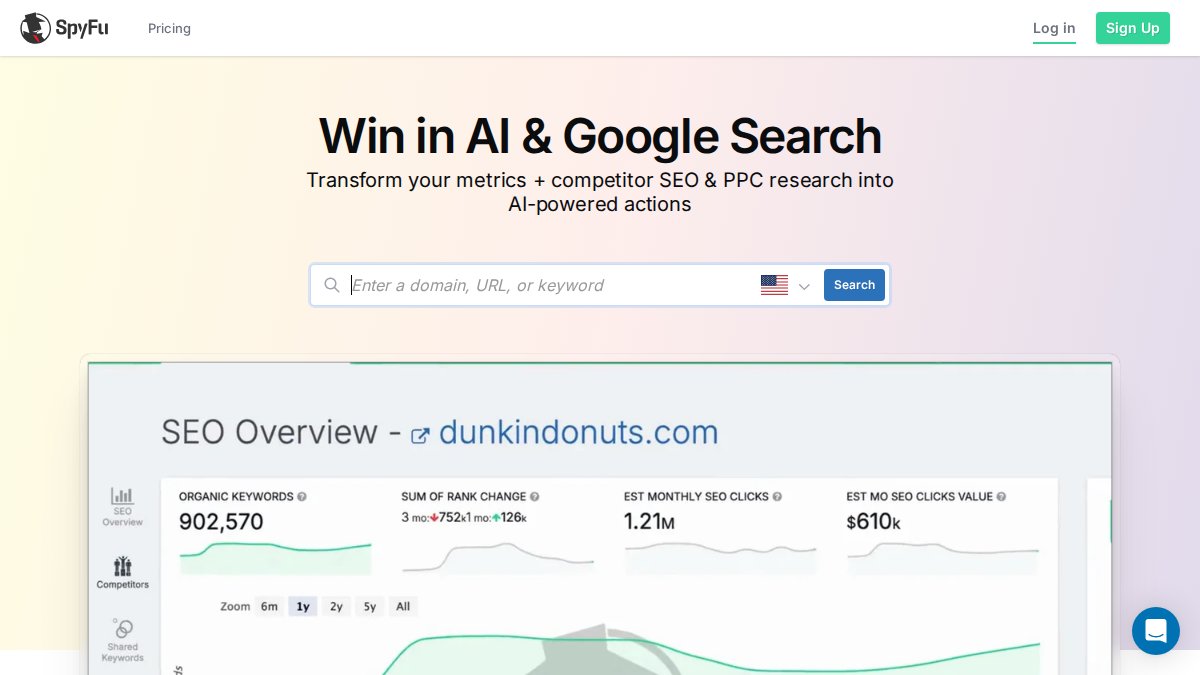
SpyFu fills a specific niche: teams with limited budgets who need focused competitor intelligence. Starting at $39 per month, it's significantly cheaper than SEMrush, Ahrefs, or Moz Pro. This price point makes it accessible for smaller mid-sized teams.
The tool excels at PPC and organic competitor analysis. You can see competitors' entire PPC history, which ads they're running, estimated budgets, and performance trends. For teams competing in the same paid search space, this intelligence feeds directly into campaign strategy. You also see competitors' organic keywords, estimated traffic, and ranking positions.
The backlink checker shows competitors' link profiles and identifies link building opportunities. It's not as comprehensive as Ahrefs, but it covers the essentials. You can export unlimited data in higher plans, which is useful for detailed analysis and reporting.
Where SpyFu falls short: it's not a comprehensive SEO platform. You won't get site audits, content optimization, or detailed technical analysis. It's a competitive intelligence tool that supplements other platforms. Mid-sized teams using SpyFu typically pair it with a more comprehensive tool like SEMrush or Ahrefs. Additionally, there's no free trial, so you're committing to a paid plan to evaluate the tool.
6. Clearscope: AI-Powered Content Optimization for Mid-Sized Teams
Clearscope specializes in content optimization using AI. If your team's primary challenge is creating SEO-optimized content at scale, Clearscope addresses that pain point directly. The platform analyzes top-ranking content for any keyword and provides specific optimization recommendations.
The content reports show what topics, subtopics, and entities successful pages cover. You see recommended word count, optimal content structure, and which keywords to include naturally. This transforms content creation from guesswork into data-driven process. Writers can follow Clearscope's recommendations and produce content that's optimized for search without needing deep SEO knowledge.
The AI content outline templates accelerate planning. Input your target keyword and Clearscope generates a recommended outline structure based on what's working in the SERP. Your team can customize it and start writing immediately rather than spending hours on research.
For mid-sized content teams (3-5 writers), Clearscope dramatically improves efficiency. Writers spend less time researching and more time writing. Content goes through fewer revision cycles because it's optimized from the start.
The limitation: Clearscope is a content optimization tool, not a comprehensive SEO platform. You won't get keyword research, rank tracking, or technical audits. Mid-sized teams need Clearscope plus other tools for a complete SEO stack. The pricing ($129/month) is also steep for what is essentially a content research and optimization layer. Smaller teams might find the cost prohibitive.
7. Screaming Frog SEO Spider: Technical SEO Audits at Scale
Screaming Frog is a desktop-based crawler that performs deep technical SEO audits. Unlike cloud-based tools that limit crawls by quota, Screaming Frog offers unlimited crawls for a one-time annual fee ($279/year). For mid-sized websites with thousands of pages, this unlimited approach is cost-effective.
The tool crawls your entire website and identifies technical issues: broken links, duplicate content, missing or duplicate meta tags, redirect chains, server errors, and crawl inefficiencies. You can configure crawls to focus on specific URL patterns or parameters, making it flexible for complex site architectures.
JavaScript rendering is a key feature. Modern websites use JavaScript to load content dynamically. Screaming Frog can crawl JavaScript-rendered content, not just static HTML. This is critical for single-page applications and modern web frameworks.
Custom extraction capabilities let you pull specific data from your site's HTML. If you need to audit a custom field or extract specific elements, Screaming Frog's XPath and regex tools handle it. This flexibility makes it powerful for technical teams.
The trade-off: Screaming Frog is a desktop application, not cloud-based. You install it locally and run crawls on your machine. This requires sufficient hardware and local storage. It's also not a complete SEO solution, you won't get keyword research, rank tracking, or competitor analysis. Mid-sized teams use Screaming Frog specifically for technical audits, supplemented with other platforms for broader SEO work.
How We Evaluated These SEO Tools for Mid-Sized Businesses
Selecting the 7 best seo tools for mid-sized business required specific evaluation criteria. We prioritized tools that address real challenges mid-sized teams face: limited budget, small team size, need for integration with other platforms, and the requirement to prove ROI to leadership.
Feature set matters, but usability matters more. A tool with 100 features that requires 10 hours of setup per week is worse than one with 40 features that works intuitively. We weighted ease of adoption heavily because mid-sized teams don't have dedicated tool administrators.
Pricing was evaluated in context of value. A tool costing $200/month that saves your team 15 hours per week is better ROI than a $50/month tool that saves 2 hours. We also considered whether tools offered free tiers or trials, since mid-sized teams often evaluate multiple platforms before committing.
Integration capabilities were critical. The best SEO tools for mid-sized business connect to your existing stack, your CRM, email platform, analytics tools, and content management system. Isolated tools create friction and require manual data transfer.
Finally, we assessed whether tools specifically serve mid-sized businesses or simply offer all-purpose platforms. Some tools are built for freelancers, others for enterprises. The 7 best seo tools for mid-sized business are those that acknowledge mid-sized teams' specific constraints and workflows.
Mid-sized businesses in Ljubljana and across the United States face the same core challenge: competing for visibility against better-resourced enterprises while maintaining lean operations. The right SEO tools reduce manual work, provide clear ROI, and scale as your business grows. GrandRanker specifically addresses the automation gap that mid-sized teams face, it handles the repetitive work that consumes time without adding strategic value, freeing your team to focus on strategy, customer relationships, and business growth.
Start with a clear picture of your team's actual workflow. What tasks consume the most time? Where do you lack visibility? Which decisions require better data? Match those gaps to tools that solve them. You don't need all 7 tools, most mid-sized teams use 2-3 core platforms supplemented with specialized tools for specific needs. The 7 best seo tools for mid-sized business succeed because they're built to work together and with your existing systems.
Mid-sized businesses often struggle with SEO because they lack dedicated resources and specialized expertise. GrandRanker solves this by automating keyword research, content creation, optimization, and publishing, turning SEO from a time-intensive manual process into an automated system that grows your organic traffic consistently. With features like AI-powered keyword discovery, automated content generation, and AI assistant citations, GrandRanker ensures you're getting customers from both Google and ChatGPT. Start your free trial with GrandRanker and see how automation transforms your SEO program.
Frequently Asked Questions
What are the best SEO tools for mid-sized businesses on a budget?
SpyFu offers competitive intelligence starting at $39/month, while Screaming Frog provides excellent technical SEO audits with a free version and annual license at $279/year. For automation-first approaches, GrandRanker offers a free trial with AI-powered keyword research and content optimization. Mid-sized teams often combine one budget-friendly tool with a free tier option to maximize ROI without overspending.
How do SEO tools help mid-sized businesses grow organic traffic?
SEO tools provide keyword research to identify high-value search opportunities, site audits to fix technical issues blocking rankings, rank tracking to monitor progress, and competitor analysis to find market gaps. For mid-sized businesses specifically, tools like SEMrush and Ahrefs offer team collaboration features, allowing your marketing department to work efficiently on keyword difficulty assessment, content optimization, and backlink strategies, directly improving search engine rankings and organic traffic.
Do mid-sized businesses need multiple SEO tools or just one platform?
Most mid-sized businesses benefit from combining 2-3 specialized tools rather than relying on a single platform. For example, pairing SEMrush for comprehensive keyword research and competitor analysis with Screaming Frog for technical SEO audits creates a complete toolkit. GrandRanker's AI automation can supplement these by handling content creation and optimization on autopilot, reducing the manual workload while maintaining quality and brand consistency across your organic strategy.
What team collaboration features matter most in SEO tools for mid-sized businesses?
Mid-sized teams need tools that support multiple users, role-based permissions, and shared reporting dashboards. SEMrush, Ahrefs, and Moz Pro all offer multi-user access and collaborative features. Key features include shared keyword tracking, collaborative content briefs, unified SERP monitoring, and exportable reports for leadership. Integration with your CRM or email marketing platform ensures SEO insights flow directly into your sales and marketing workflows, improving ROI transparency.
Can SEO tools integrate with other marketing platforms mid-sized businesses already use?
Yes. Most enterprise-grade tools like SEMrush, Ahrefs, and Conductor support integrations with Google Analytics, Google Search Console, CRM systems, and email marketing platforms. GrandRanker specifically integrates SEO automation with your existing content and publishing workflows. Before selecting a tool, verify it connects to your current martech stack, CMS, analytics, or email platforms, to ensure seamless data flow and avoid manual reporting overhead.
This article was written using GrandRanker